What Is 5S? The Lean Workplace Organization System Explained
The 5S methodology is a foundational element of lean thinking, designed to create clean, organized, and efficient workplaces. Originating in Japan as...
2 min read
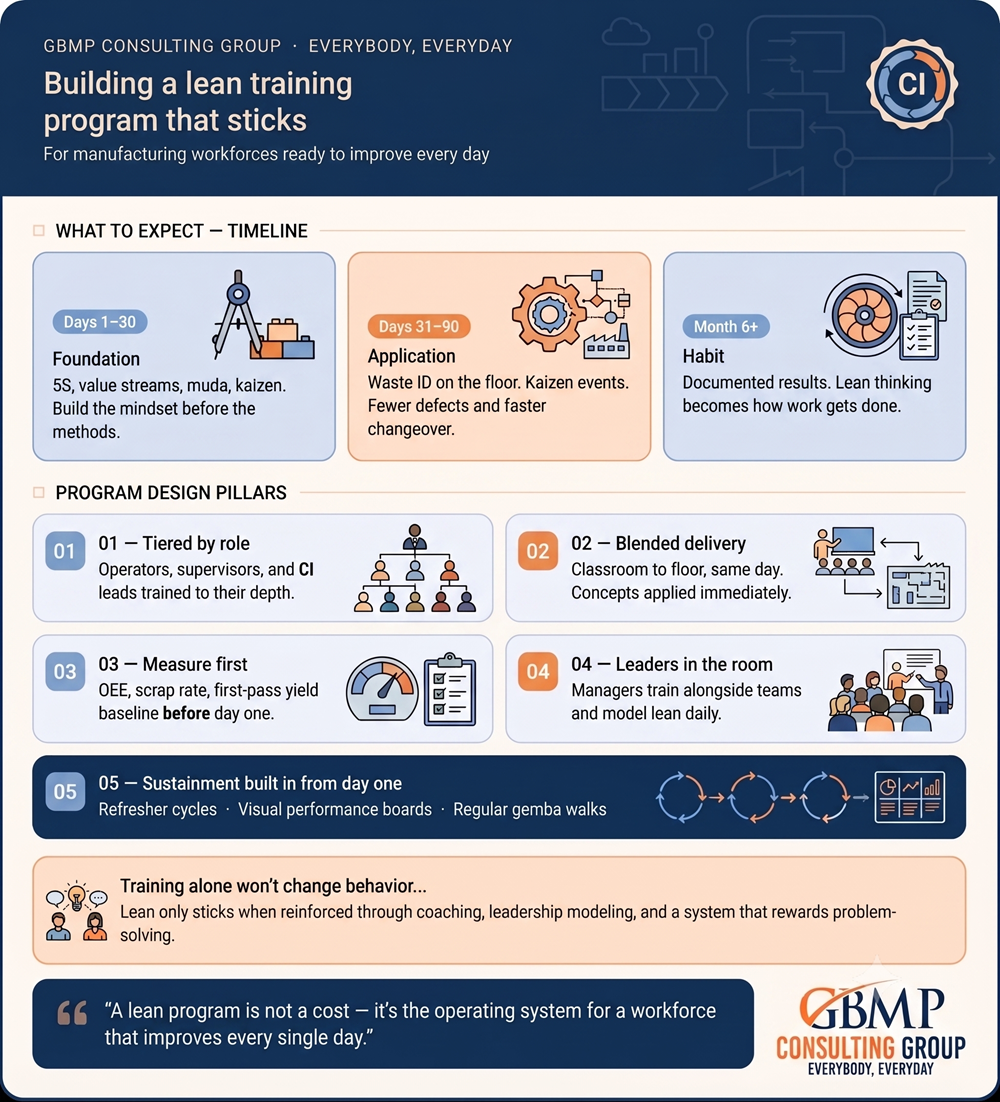
Building a lean training program for your manufacturing workforce is one of the most effective investments you can make in long-term operational efficiency. When employees understand lean principles like when and how to apply them on the floor and in their work every day, waste decreases, throughput improves, and your team becomes a genuine engine for continuous improvement.
This guide walks through how to design and launch a lean workforce training program that actually sticks.
 What To Expect From a Lean Training Program
Before diving into design and rollout, it helps to set clear expectations. A well-structured employee lean program delivers results in phases, not overnight. This is where an experienced lean consultant comes in.
First 30 days: Build foundational awareness. Employees will learn the core vocabulary of lean like 5S, value streams, waste (muda) and kaizen, and begin seeing their daily work through a new lens. This phase is about mindset, not transformation.
Between 30 and 90 days: Early application. Team members will start identifying low-hanging waste in their areas, participating in structured problem-solving events, and flagging inefficiencies they previously accepted as normal. Leadership will begin to see initial wins: reduced changeover times, cleaner workstations, fewer defects caught downstream.
By the six-month mark: Producing measurable, documented improvements. Departments that engaged fully typically report reductions in downtime, better material flow, and improved cross-shift communication. More importantly, lean thinking starts to become habit rather than a training exercise.
Oh and by the way, here's what you should not expect: a one-and-done seminar that will change behavior. Lean training for employees only works when it is reinforced through coaching, leadership modeling, and a system that rewards problem-solving. If a training program lives only in a classroom, it will not survive contact with the production floor.
Effective lean training program design starts with aligning content to your specific production environment. Generic lean content teaches concepts and not much else; customized content teaches application and provides team members with knowledge and confidence.
1. Tiered Learning by Role Not every employee needs the same depth of training. Frontline operators need practical, hands-on instruction in 5S, standard work, and visual management. Supervisors and team leads need additional grounding in daily management systems and kaizen facilitation. Engineers and continuous improvement leads need deeper tools like value stream mapping, SMED, and root cause analysis methods.
2. Blended Delivery Combine short classroom sessions (60–90 minutes) with immediate on-floor application. Employees learn lean concepts best when they can walk from a whiteboard directly to a workstation and try what they just learned.
3. Measurement From Day One Define what success looks like before training begins. Establish baseline metrics: OEE, scrap rates, first-pass yield, 5S audit scores so progress is visible and credible.
4. Leadership Involvement Lean workforce training fails when managers are absent from the process. When supervisors participate in training, model lean behaviors, and actively support kaizen activity, engagement and adoption accelerate significantly.
5. Sustainment Plan Build refresher cycles, visual performance boards, and regular gemba walks into the program from the start. Training without a sustainment structure produces a short-term spike and a long-term plateau.
A structured employee lean program is not a cost. It is the operating system for a workforce capable of driving continuous improvement. Design it with intention, and your manufacturing team will deliver results that compound over time. To learn more about how GBMP can support your organization's lean training program design, visit our Training and Facilitation webpage or schedule a call with us. We would welcome the opportunity to learn about your goals, answer your questions, and explore the best approach for your team.
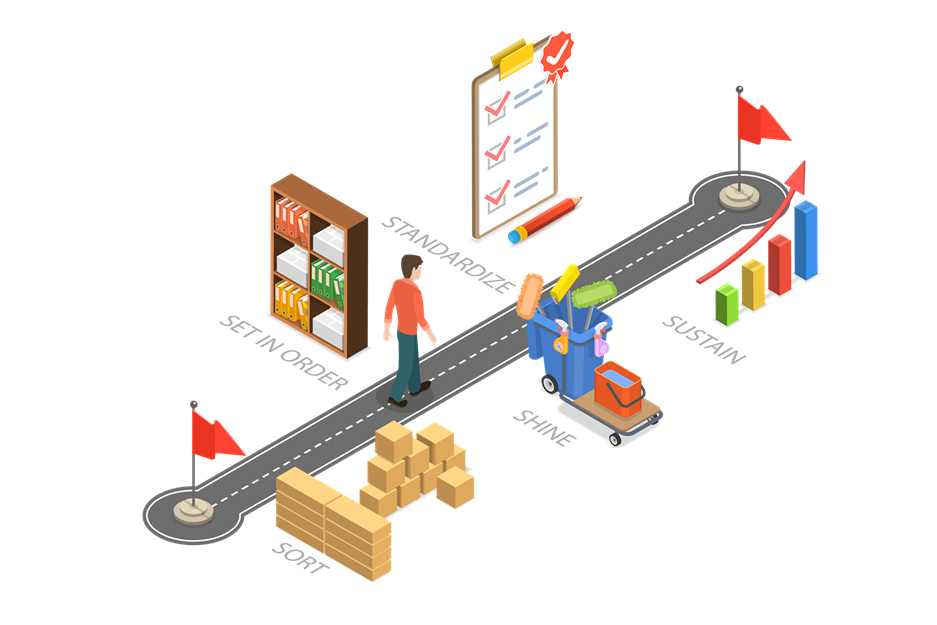
The 5S methodology is a foundational element of lean thinking, designed to create clean, organized, and efficient workplaces. Originating in Japan as...
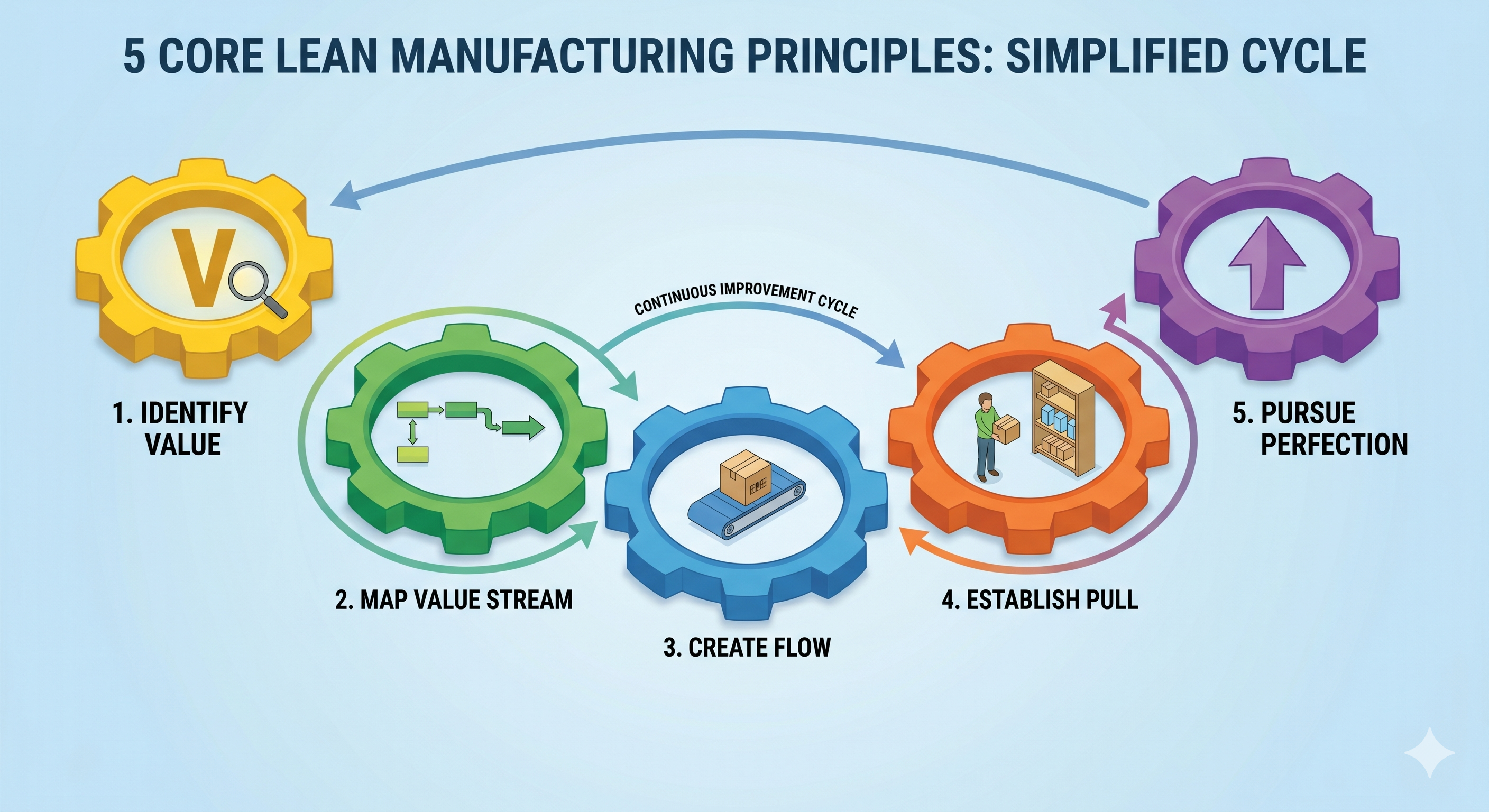
Lean manufacturing is built on a simple but powerful idea: maximize value while minimizing waste. Originating from the Toyota Production System, lean...
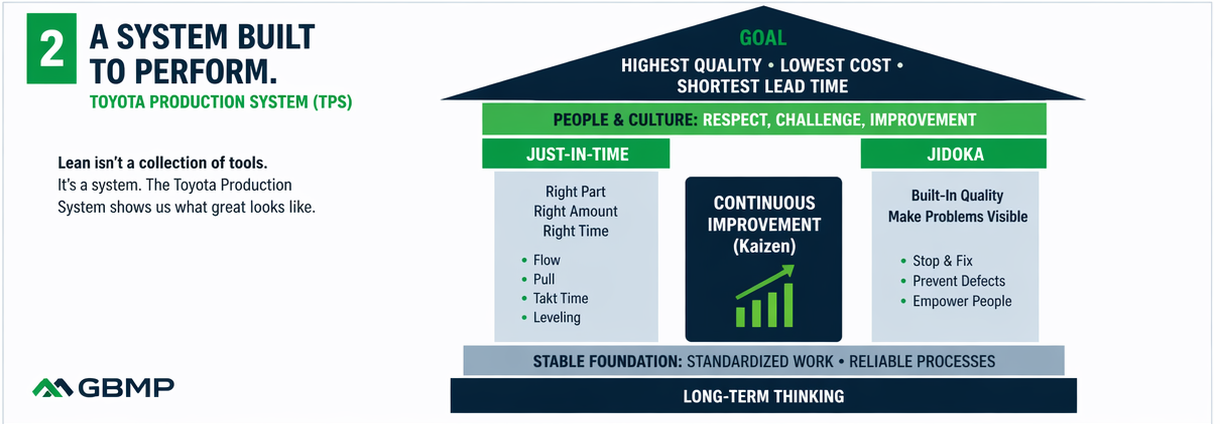
Lean manufacturing is a method for improving operations by eliminating waste and focusing only on activities that create value for the customer. At...