What Is Takt Time and Why Does It Matter in Lean Production?
If you've ever watched an assembly line run at a perfectly steady rhythm with no rushing and no waiting , then you've seen takt time in action. It's...
2 min read

Every minute your line is stopped for a changeover is a minute it isn't producing. In competitive manufacturing environments, that lost time adds up fast. SMED (Single Minute Exchange of Die) is the lean methodology designed to shrink those stops from hours to minutes!
SMED stands for Single Minute Exchange of Die, a systematic approach to reducing equipment changeover time to under ten minutes (i.e., a "single digit" number of minutes). Developed by industrial engineer Shigeo Shingo while working with Toyota, SMED is one of the most powerful tools in the lean manufacturing toolkit.
A changeover is the process of switching a machine or production line from running one product to another, including activities such as swapping tooling, adjusting settings, cleaning equipment, and verifying quality before restarting. In traditional manufacturing, changeovers can take hours. SMED challenges that assumption entirely.
Long changeovers force manufacturers into a difficult trade-off: run large batches to spread the downtime cost across more units, or accept frequent, expensive stoppages. Large batches mean more inventory, more floor space, longer lead times, and less flexibility to respond to customer demand.
SMED breaks that trade-off. When changeovers are fast, small batches become economical. You gain the ability to produce a greater variety of products in smaller quantities, flowing closer to actual demand, reducing waste, and improving responsiveness without sacrificing efficiency.
In short, SMED is what makes lean flow possible at the machine level.
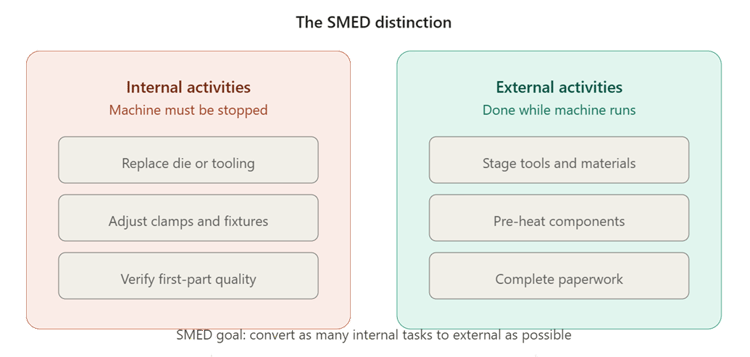
The heart of the SMED methodology is a simple but powerful distinction:
Step 1: Document the current changeover. Video record the full changeover process from the last good part of the previous run to the first good part of the new run. Note every task, every wait, every walk.
Step 2: Separate internal from external. Identify which tasks truly require the machine to be stopped and which don't. In most changeovers, a significant portion of "internal" work can actually be converted to external.
Step 3: Convert internal to external. Move as many tasks as possible outside the stopped window. Pre-stage tools and materials, pre-set adjustments offline, prepare dies or fixtures while the previous run finishes.
Step 4: Streamline remaining internal tasks. Standardize procedures, use quick-release fasteners instead of bolts, create dedicated changeover carts, and apply 5S to the changeover area so nothing is searched for or improvised.
Step 5: Sustain and improve. Document the new standard, train the team, and time every changeover. Treat each one as an opportunity to improve further.
Teams that implement SMED typically see 50–75% reductions in changeover time in their first improvement event. A three-hour changeover becomes 45 minutes. A 90-minute changeover becomes 20. The gains aren't theoretical. They come from disciplined observation, creative problem-solving, and team-based standardization.
And once the time savings are locked in, they compound. Smaller batch sizes, more production flexibility, reduced inventory, and faster response to customer demand all follow naturally.
Understanding SMED is the first step and hopefully this article has helped you with that. Implementing it on your shop floor is where the real gains happen. Whether you're preparing for your first SMED event or looking to go deeper on changeover reduction across multiple lines, the team at GBMP Consulting Group can help. Through hands-on training and facilitation, GBMP guides manufacturing teams through every stage of the SMED process - from filming and analyzing your current changeover to running the improvement event and building the new standard. Visit GBMP's Training and Facilitation page to learn how they can help your team reduce changeover time and unlock the flexibility your operation needs.

If you've ever watched an assembly line run at a perfectly steady rhythm with no rushing and no waiting , then you've seen takt time in action. It's...
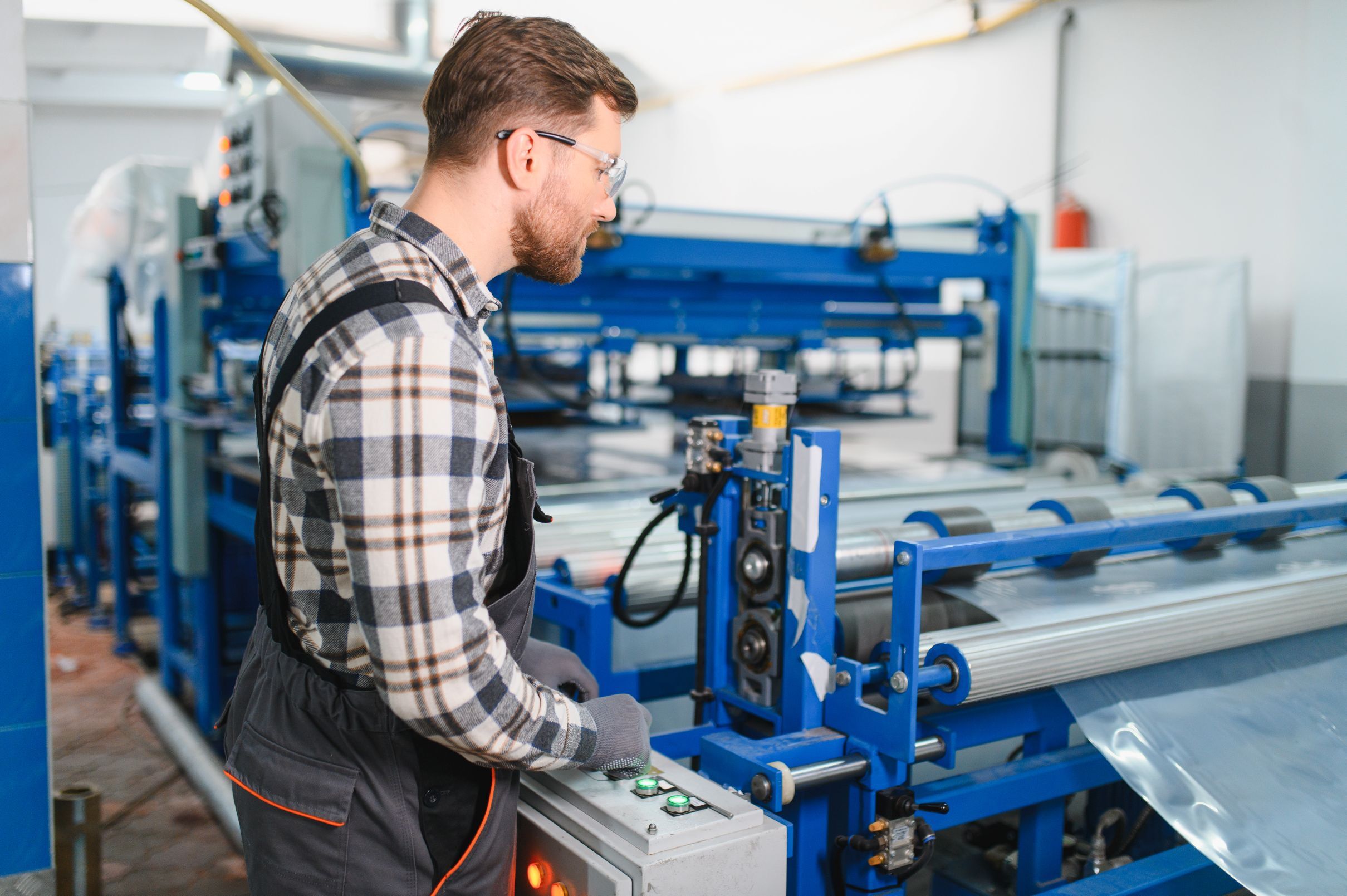
If your production line keeps falling short of targets, the problem might be invisible losses hiding inside your equipment. OEE (Overall Equipment...
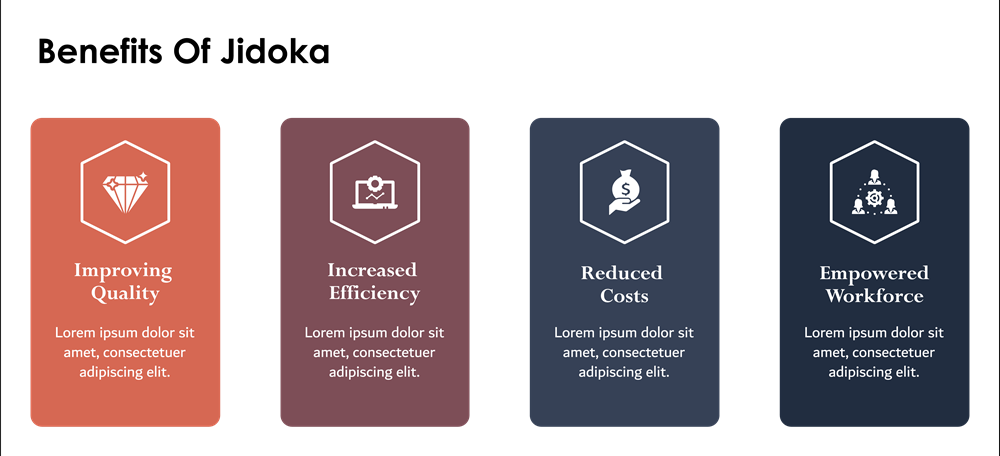
In lean manufacturing, quality is not something to inspect at the end of production. It is something to build into the process from the start. Jidoka...