What Is Lean Manufacturing? A Plain-English Guide for Operations Leaders
Lean manufacturing is a method for improving operations by eliminating waste and focusing only on activities that create value for the customer. At...
2 min read

In today’s competitive environment, manufacturing teams need clear visibility into their processes to improve efficiency and deliver value. That’s where value stream mapping (VSM) comes in. If you’re looking to understand how work flows across your operation, and where waste is hiding, this Lean tool is essential.
This guide breaks down value stream mapping steps and shows how teams can use VSM Lean principles to drive meaningful improvement.
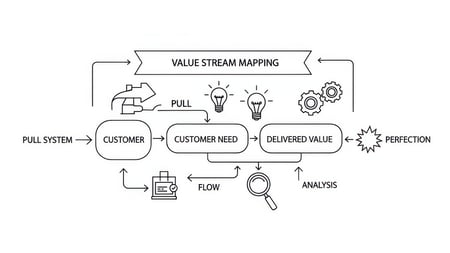 What Is Value Stream Mapping?
Value Stream Mapping (VSM) is a visual representation of all the steps, both value-added and non-value-added, required to deliver a product or service to the customer. It maps both the flow of materials and the flow of information, giving teams a complete picture of how work actually happens.
Unlike basic process maps, VSM highlights inefficiencies like delays, bottlenecks, excess inventory, and rework. This makes it an essential tool for identifying opportunities to improve flow and reduce waste.
Applying value stream mapping helps organizations move beyond isolated improvements and instead optimize the entire system. With VSM, teams can:
By making problems visible, VSM creates alignment and focus for continuous improvement efforts.
To successfully implement value stream mapping, follow these core steps:
1. Select the Value Stream
Choose a specific product family or process with similar steps. This ensures your map is focused and actionable.
2. Understand Customer Demand
Determine takt time (the rate at which products must be produced to meet customer needs). This sets the pace for your system.
3. Map the Current State
Document how the process operates today. Include process steps, cycle times, wait times, inventory levels, and information flow. This “current state map” exposes inefficiencies and delays.
4. Identify Waste
Analyze the current state using Lean principles. Look for common forms of waste such as waiting, overproduction, excess motion, and defects.
5. Design the Future State
Create a vision for a more efficient process. The future state map should focus on improving flow, reducing inventory, and aligning production with demand.
6. Develop an Action Plan
Break improvements into manageable steps. Assign ownership, define timelines, and prioritize actions that will have the greatest impact.
7. Implement and Improve Continuously
Execute the plan and track results. VSM is not a one-time exercise—it should evolve as your processes improve.
To get the most from VSM Lean, keep these tips in mind:
Within Lean’s foundational toolkit, Value Stream Mapping (VSM) plays a critical role in connecting strategy to execution. As part of Core Tools, it helps organizations see the big picture, prioritize improvements, and align teams around shared goals.
Rather than optimizing individual steps in isolation, VSM ensures that improvements enhance the performance of the entire system.
If your team is ready to apply value stream mapping steps and accelerate improvement, expert guidance can help you move faster and avoid common pitfalls. By mastering value stream mapping, manufacturing teams can uncover hidden inefficiencies, improve flow, and deliver greater value to customers - consistently and efficiently.
GBMP offers hands-on training and facilitation to help your team successfully implement value stream mapping and other Lean tools. Learn how to visualize your processes, eliminate waste, and build a roadmap for sustainable improvement: https://www.gbmp.org/training-facilitation/
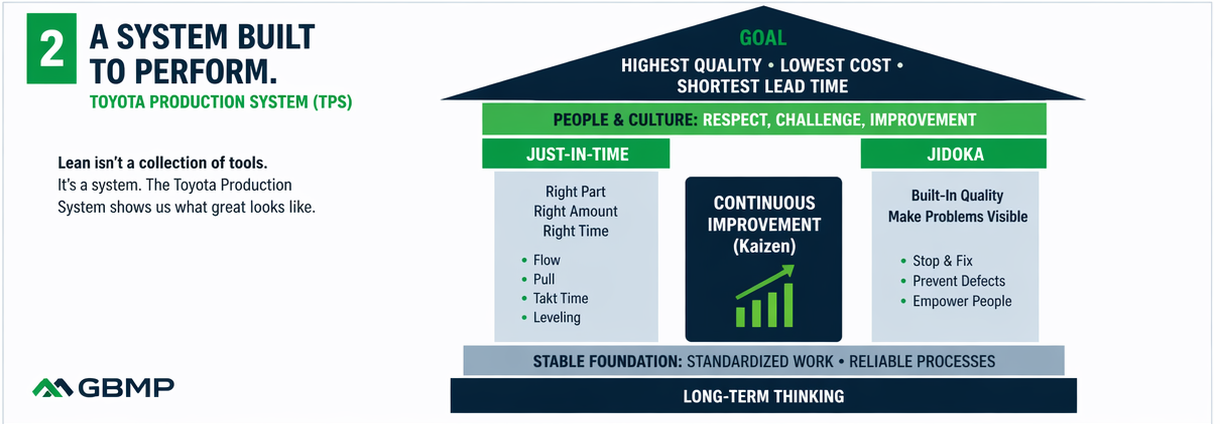
Lean manufacturing is a method for improving operations by eliminating waste and focusing only on activities that create value for the customer. At...
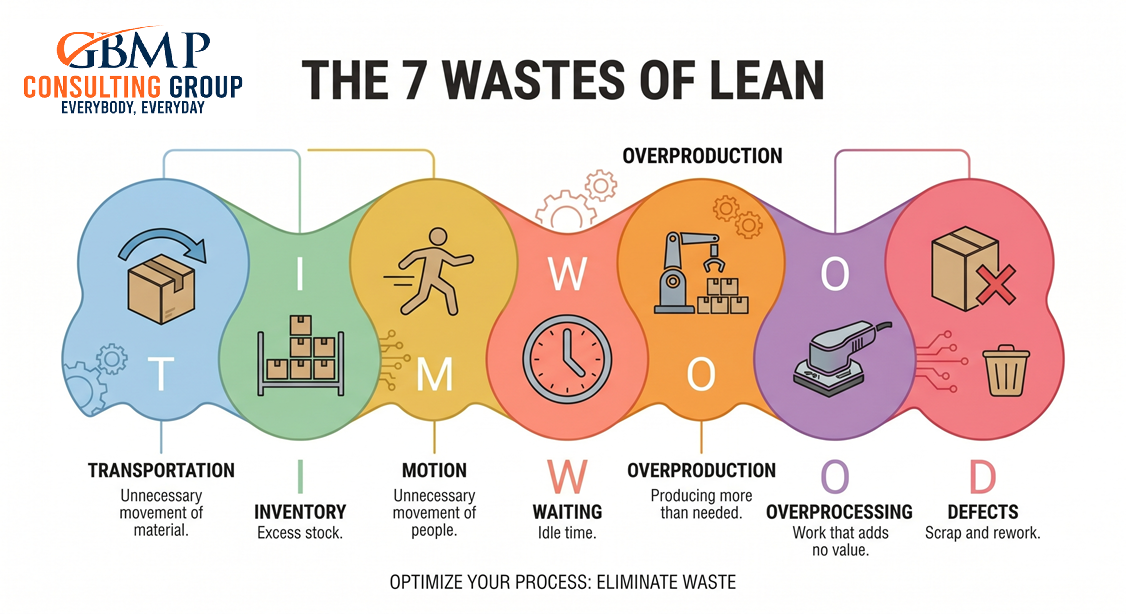
Lean manufacturing is built on a simple but powerful idea: eliminate anything that does not add value to the customer. At the heart of this...
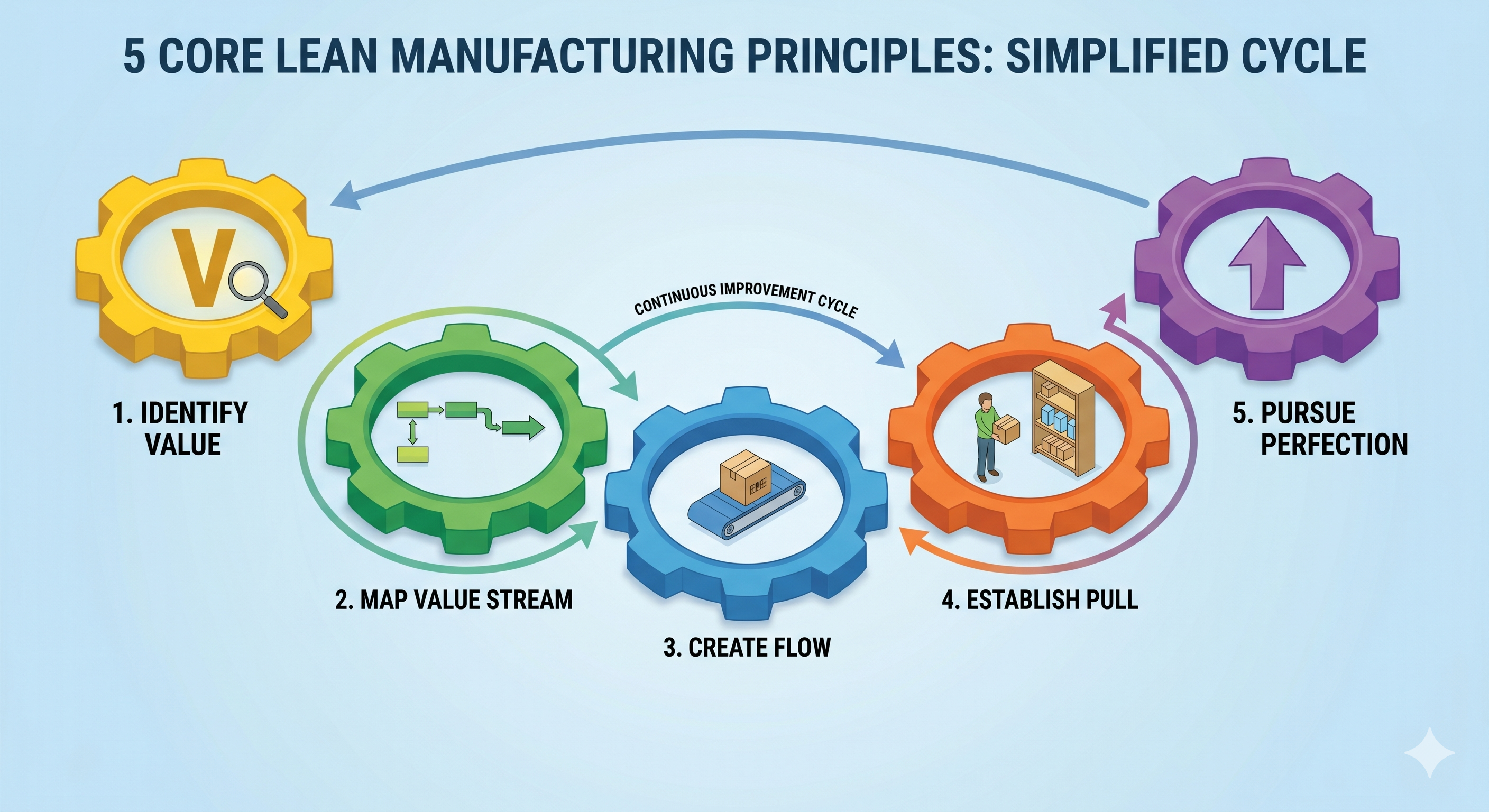
Lean manufacturing is built on a simple but powerful idea: maximize value while minimizing waste. Originating from the Toyota Production System, lean...