Poka-Yoke: What It Is and How to Use Error-Proofing on the Shop Floor
Poka-yoke, a key concept in lean thinking, refers to designing processes in a way that prevents errors before they happen. Often translated as...
2 min read
In lean manufacturing, quality is not something to inspect at the end of production. It is something to build into the process from the start. Jidoka is the lean principle that makes this possible. Often translated as “automation with a human touch,” jidoka helps organizations detect problems early, stop defects from moving forward, and create processes that support both quality and continuous improvement.
Jidoka is one of the core concepts of the Toyota Production System, or TPS. Along with just-in-time production, it provides a foundation for creating stable, efficient, and customer-focused operations. While just-in-time manufactruing focuses on producing what is needed, when it is needed, jidoka focuses on ensuring that each step produces quality before work continues.
Jidoka means that a process is designed to recognize an abnormal condition and respond immediately. In many lean environments, this means stopping the process when a defect, equipment issue, missing part, or other problem occurs. The purpose is not to assign blame or slow production unnecessarily. The purpose is to prevent defects from being passed downstream and to give teams the opportunity to correct the root cause.
The term is also knows as autonomation with a human touch, a core TPS principle. Autonomation describes machines or processes that can detect problems and stop automatically, while still relying on people for judgment, problem-solving, and improvement. This is different from simple automation, which may continue running even when defects are being created.
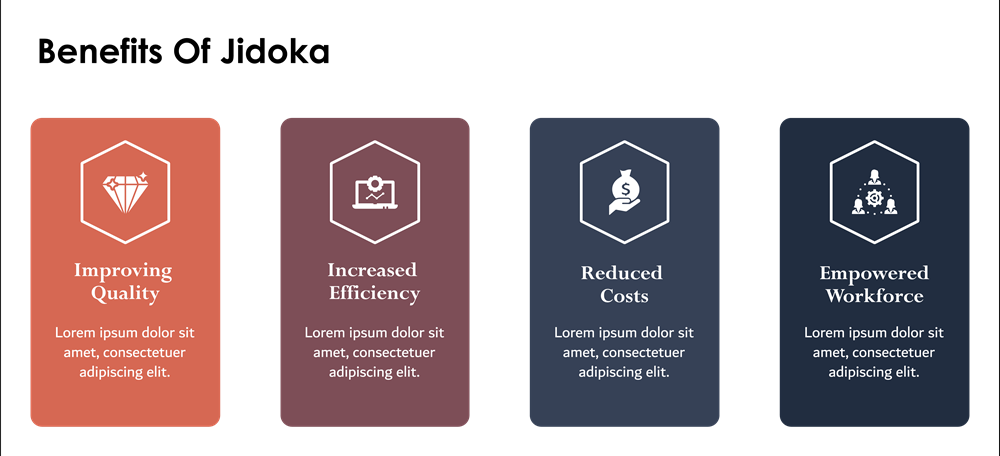
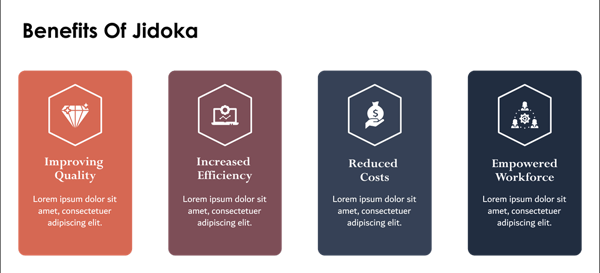
Without jidoka, problems can remain hidden until they become larger and more expensive to fix. A defect created early in the process may move through several steps before it is discovered. By that point, time, labor, materials, and capacity have already been wasted.
Jidoka changes this pattern by making abnormalities visible immediately. When a team member can stop the line or trigger support, the organization can respond at the source of the problem. This helps reduce rework, scrap, delays, and customer complaints.
Just as important, jidoka supports respect for people. It gives employees the authority and responsibility to protect quality. Instead of asking people to work around problems, jidoka encourages team members to surface issues so the process can be improved.
Built-in quality means that every process step is capable of confirming whether work is correct before passing it on. This may involve error-proofing devices, sensors, standard work, visual controls, and clear response procedures. The goal is to make it difficult for defects to occur and easy to detect them when they do.
When implementing jidoka, stopping a process to fix a problem is not seen as lost productivity. It is seen as an investment in stability. A process that continues producing defects is not truly efficient, even if it appears busy. True efficiency comes from producing quality work correctly the first time.
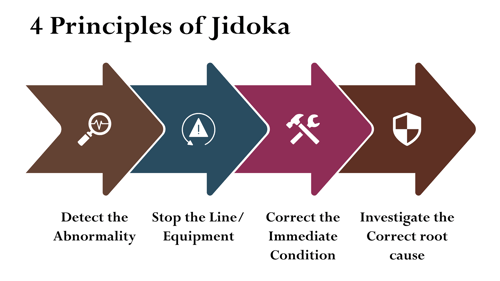 Organizations can begin applying jidoka by identifying where defects are most often discovered and asking how those problems could be detected earlier. Teams should define normal conditions, create simple ways to signal abnormalities, and establish a clear response when support is needed.
Andon systems, poka-yoke, standardized work, and root cause problem-solving all support jidoka. Together, these tools help create a culture where problems are visible, people are empowered, and
improvement happens at the source.
Jidoka is more than a technical method. It is a management principle that connects quality, people, and process improvement. By building quality into the process, manufacturers can reduce waste, improve reliability, and strengthen customer trust. As a key element of the Toyota Production System (TPS), Continuous Improvement & Lean Manufacturing, jidoka and autonomation help organizations move closer to the goal of doing the right work, the right way, every time.
Jidoka is straightforward in concept but requires skilled facilitation to implement well. Resistance and inconsistency can be common pitfalls. Visit the GBMP website to explore programs and services that help manufacturing teams build jidoka into their processes to improve the quality and reliability every lean improvement initiative needs.

Poka-yoke, a key concept in lean thinking, refers to designing processes in a way that prevents errors before they happen. Often translated as...
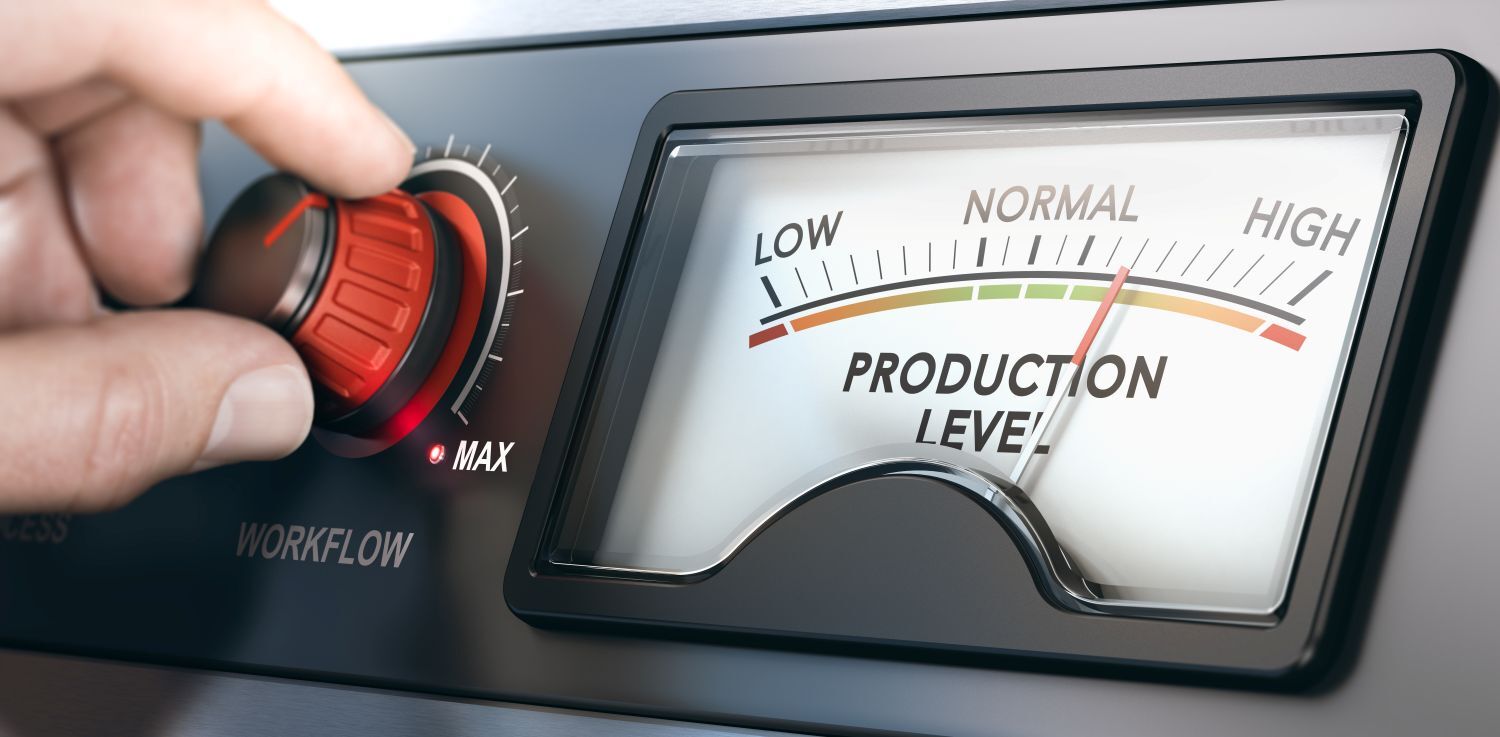
Uneven demand is one of the biggest causes of waste in manufacturing. When production swings from rush periods to idle time, teams often respond with...

If you've ever watched an assembly line run at a perfectly steady rhythm with no rushing and no waiting , then you've seen takt time in action. It's...