Jidoka: The Lean Principle of Building Quality Into the Process
In lean manufacturing, quality is not something to inspect at the end of production. It is something to build into the process from the start. Jidoka...
2 min read

Poka-yoke, a key concept in lean thinking, refers to designing processes in a way that prevents errors before they happen. Often translated as “mistake-proofing,” this approach is widely used in error proofing lean systems to improve quality, reduce defects, and make work more reliable. In mistake proofing manufacturing, the goal is simple: make it difficult, and even impossible, for errors to occur.
Originally developed within the Toyota Production System, poka-yoke shifts the focus from detecting defects to preventing them entirely. Instead of relying on inspection, organizations build quality directly into the process.
At its core, poka-yoke is about anticipating human error and designing safeguards that either stop a mistake or immediately signal that something is wrong. These solutions can be simple, low-cost, and highly effective.
Common examples include:
By embedding these mechanisms into daily work, error proofing lean systems reduce reliance on memory and vigilance alone.
Errors are inevitable in any process involving people. However, their impact can be minimized or even completely eliminated through thoughtful design. Mistake proofing manufacturing helps organizations:
Rather than blaming individuals, poka-yoke focuses on improving the system. This aligns with lean principles that prioritize continuous improvement and respect for people.
Poka-yoke methods generally fall into two categories:
Both approaches are valuable, but prevention is typically preferred because it eliminates the possibility of defects altogether.
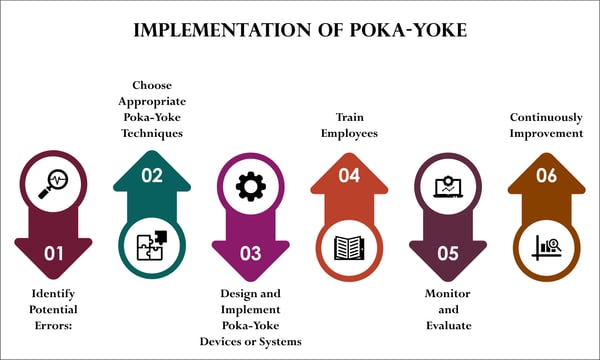 Implementing poka-yoke starts with understanding where errors occur. Teams can analyze processes, identify common mistakes, and then design simple interventions.
Effective practices include:
Even small changes—like color coding, guides, or physical barriers—can have a significant impact when applied thoughtfully.
Successful error proofing lean initiatives rely on practical tools that support both implementation and long-term sustainability. Visual controls, standardized work instructions, sensors, and simple mechanical devices are all common elements of poka-yoke systems.
Equally important are training and capability-building components. Structured learning experiences such as hands-on workshops, simulations, and real-world problem-solving exercises help teams understand how to identify risks and design effective solutions. These training elements ensure that mistake proofing manufacturing becomes an ongoing practice rather than a one-time fix.
To build lasting capability, organizations should invest in developing employees’ skills in observation, root cause analysis, and creative problem-solving. Learn more about how to strengthen these capabilities through targeted training by GBMP Consulting Group here: The GBMP Training Model
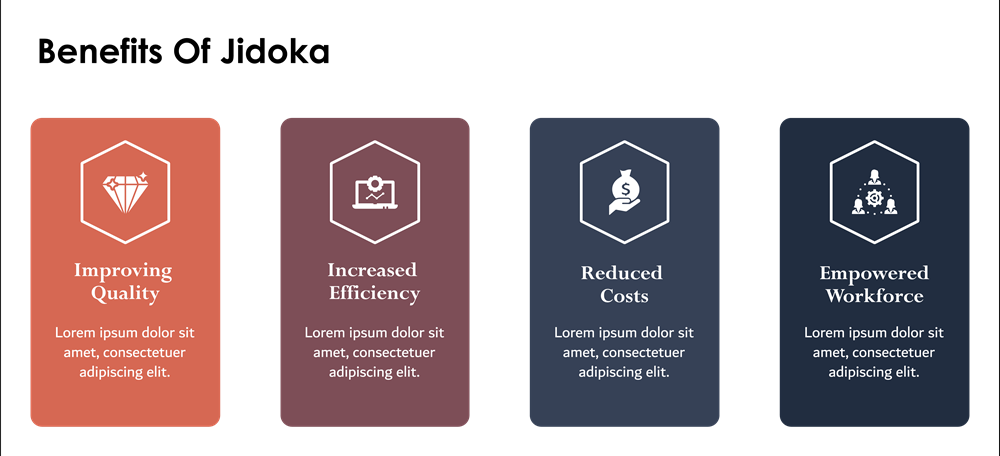
In lean manufacturing, quality is not something to inspect at the end of production. It is something to build into the process from the start. Jidoka...
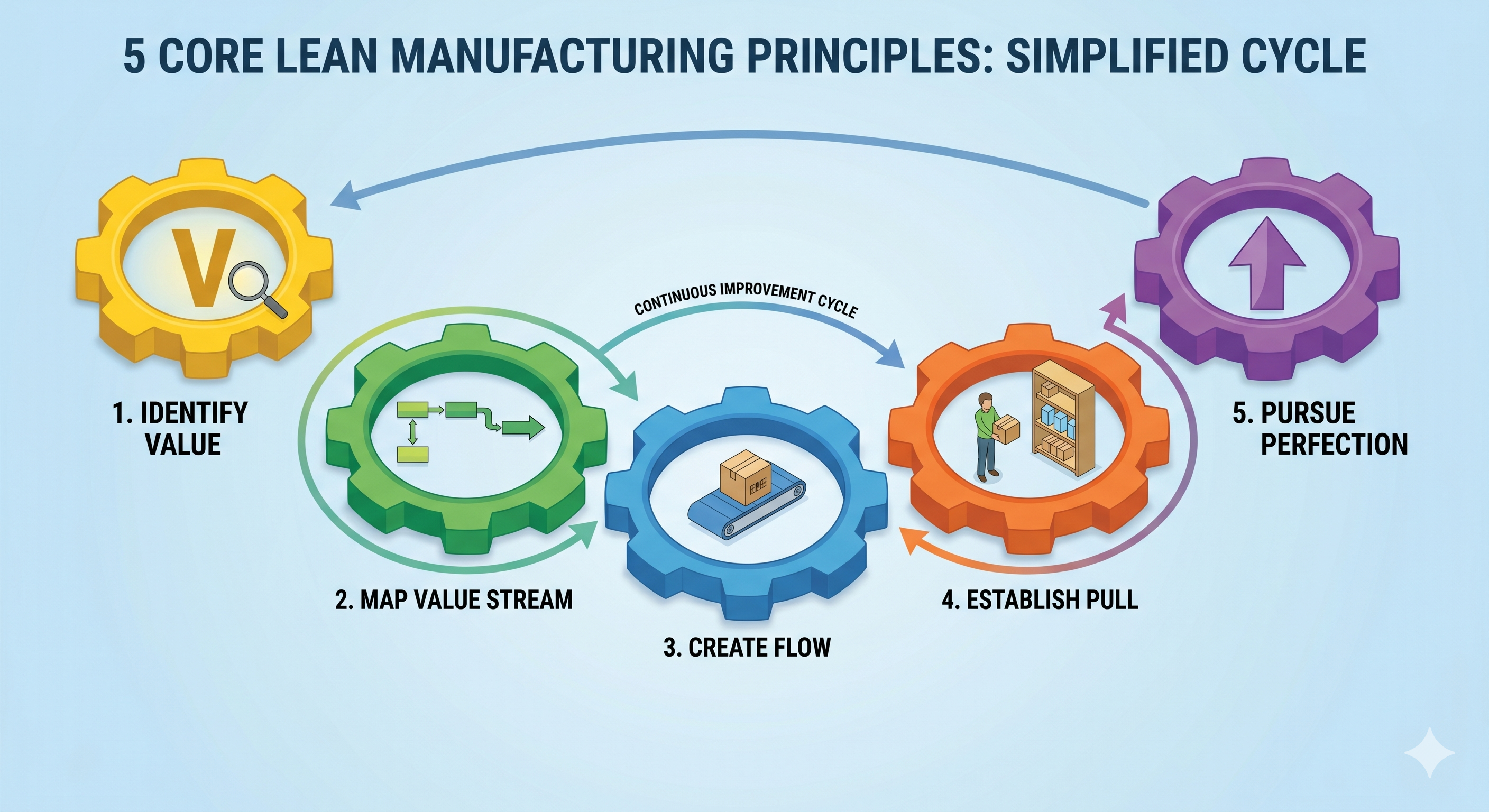
Lean manufacturing is built on a simple but powerful idea: maximize value while minimizing waste. Originating from the Toyota Production System, lean...
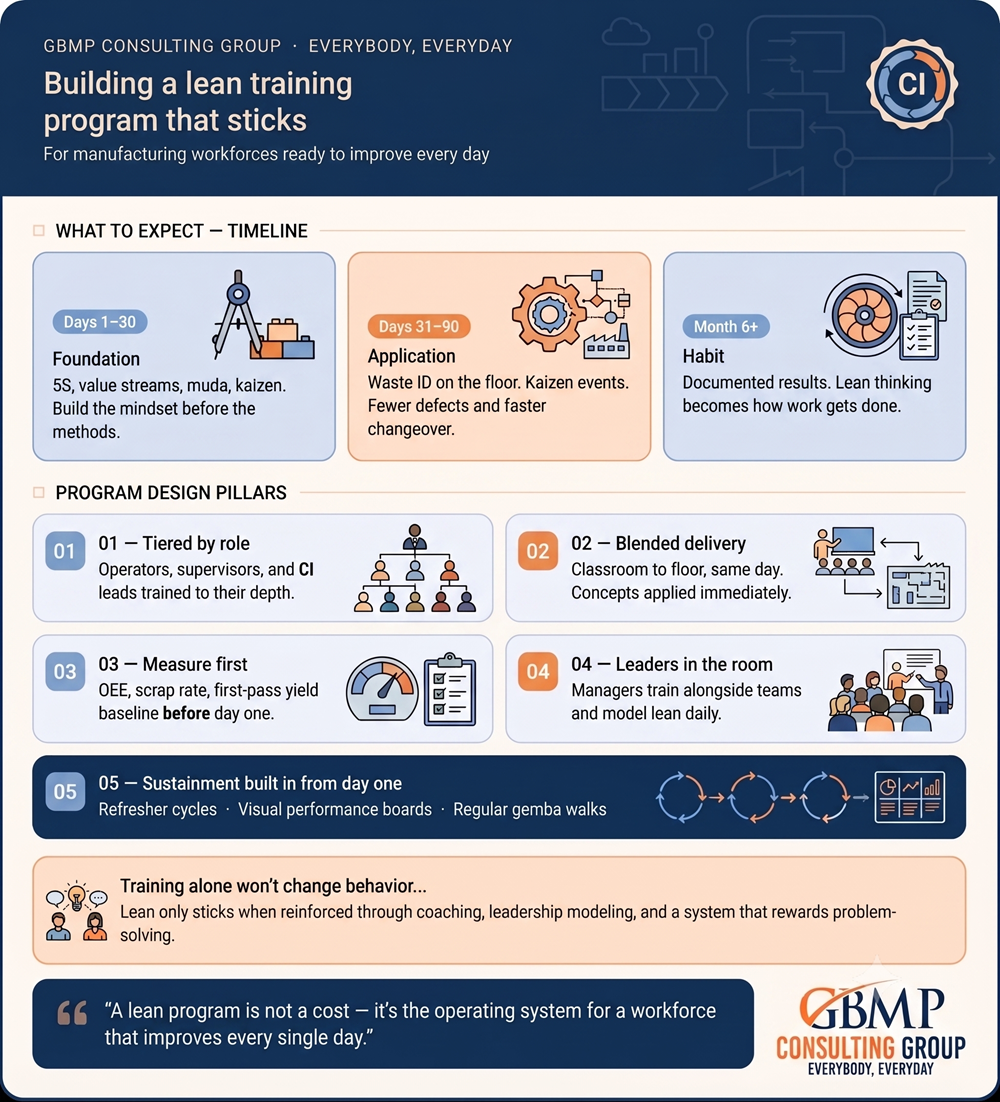
Building a lean training program for your manufacturing workforce is one of the most effective investments you can make in long-term operational...