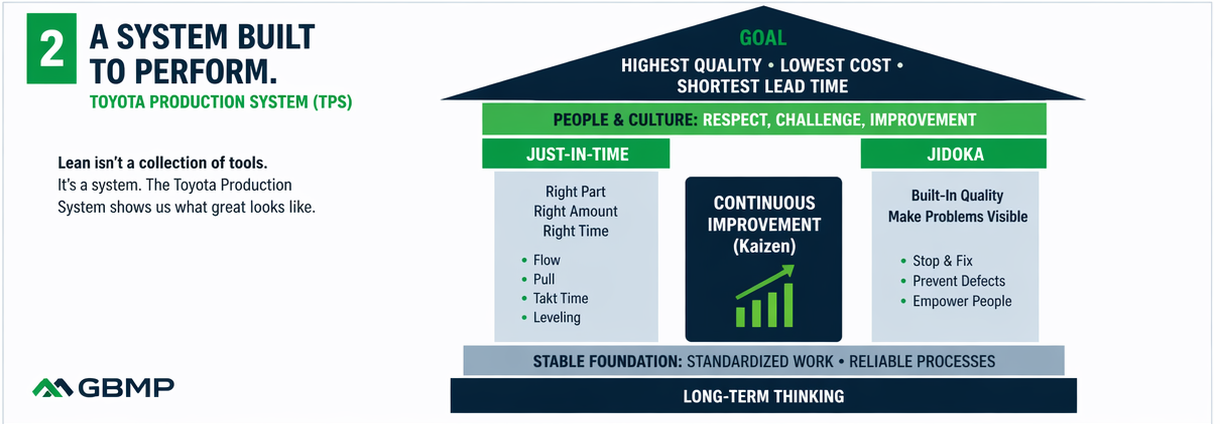
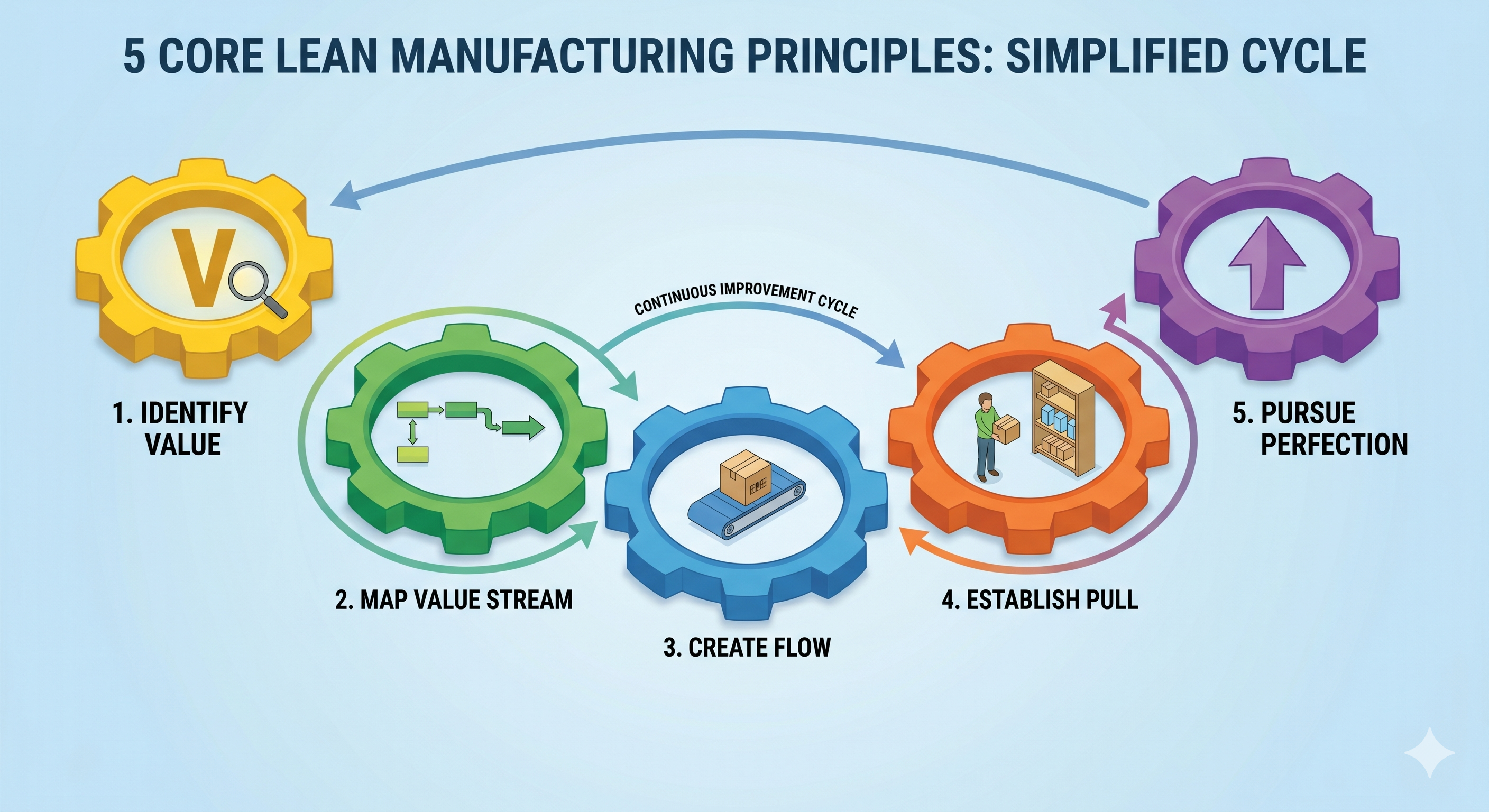
A kanban system in manufacturing is a core lean method used to control production, manage inventory, and improve workflow. Rooted in the Toyota Production System, kanban enables a pull system in manufacturing, where work is triggered by actual demand rather than forecasts. The result is smoother operations, reduced waste, and better responsiveness to customer needs.
Unlike traditional “push” systems that produce based on schedules, kanban lean systems ensure that nothing is made unless there is a clear signal to do so. This shift helps organizations avoid overproduction, one of the most costly forms of waste.
What Is a Kanban System?
A kanban system in manufacturing uses visual signals such as cards, bins, or digital indicators to manage the flow of materials and tasks. Each signal represents a specific quantity of work and authorizes the next step in the process.
For example:
- When a downstream process uses a part, it sends a kanban signal upstream to replenish it
- Inventory is limited to predefined levels, preventing excess buildup
- Work moves only when capacity is available
This creates a self-regulating system where production aligns closely with real demand.
Push vs. Pull: Why It Matters
In a traditional push system, production is scheduled in advance, often leading to overproduction, excess inventory, and inefficiencies. In contrast, a pull system in manufacturing ensures that each step only produces what the next step needs, when it needs it.
Benefits of this approach include:
- Reduced inventory costs
- Improved cash flow
- Greater flexibility to changes in demand
- Enhanced visibility into process bottlenecks
By adopting kanban lean principles, organizations can better synchronize operations and eliminate waste.
Key Elements of a Kanban System
A successful kanban system relies on a few essential components:
- Visual signals: Cards, boards, or electronic systems that communicate demand
- Defined work limits: Clear caps on work-in-progress (WIP) to prevent overload
- Standardized processes: Consistent workflows that make signals reliable
- Continuous monitoring: Regular review and adjustment to maintain flow
These elements work together to create transparency and control across the production process.
Implementing Kanban on the Shop Floor
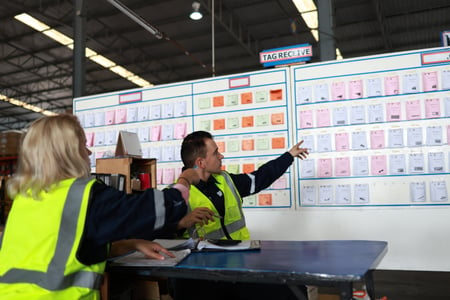 Getting started with a kanban system in manufacturing doesn’t require complex technology. Many organizations begin with simple, manual systems and evolve over time.
Best practices include:
- Mapping the current workflow to identify constraints
- Setting realistic WIP limits
- Training teams to understand and follow kanban signals
- Continuously improving based on performance data
Engaging frontline employees is critical, as they are closest to the work and can provide valuable insights into what works and what doesn’t.
Getting Started with Kanban Systems
To sustain a pull system in manufacturing, organizations rely on a combination of visual and operational tools. Kanban boards, signal cards, bin systems, and digital tracking platforms help maintain flow and ensure that work is triggered appropriately.
Equally important are training and capability-building tools. Teams need hands-on experience to understand how to design, manage, and improve kanban systems effectively. Workshops, simulations, and real-world exercises help reinforce the principles of kanban lean and ensure consistent application across the organization.
Building these skills is essential for long-term success. To explore how GBMP's structured training supports lean implementation, please visit: Lean Coaching & Facilitation programs by GBMP