The Shingo Model Explained: A Framework for Operational Excellence
Most continuous improvement efforts stall because they focus on tools instead of culture. A team runs a kaizen event, improves a process, and then...
2 min read
On a busy production floor, a single undetected defect can multiply into thousands before anyone notices. Andon systems exist to prevent exactly that, giving workers and supervisors a shared, real-time view of line status so problems are surfaced and solved in the moment they occur.
The word andon (行灯) comes from the Japanese for "paper lantern", a light that signals presence or status. In manufacturing, an andon system is a visual signaling mechanism that communicates the current health of a production line. Workers trigger an andon signal when they detect an abnormality: a quality issue, a parts shortage, an equipment fault, or a safety concern.
That signal, typically a colored light, digital display, or audible alert, immediately notifies team leaders and support staff. Work either pauses at that station or a countdown begins, giving a supervisor a defined window to respond before the line stops.
An andon system is one of the foundational tools of Lean manufacturing and the Toyota Production System. It operationalizes two core lean principles:
In lean environments, an andon signal production event is never treated as a failure. It is treated as valuable data. The goal is to surface the root cause while the evidence is still fresh and not to keep the line running at all costs.
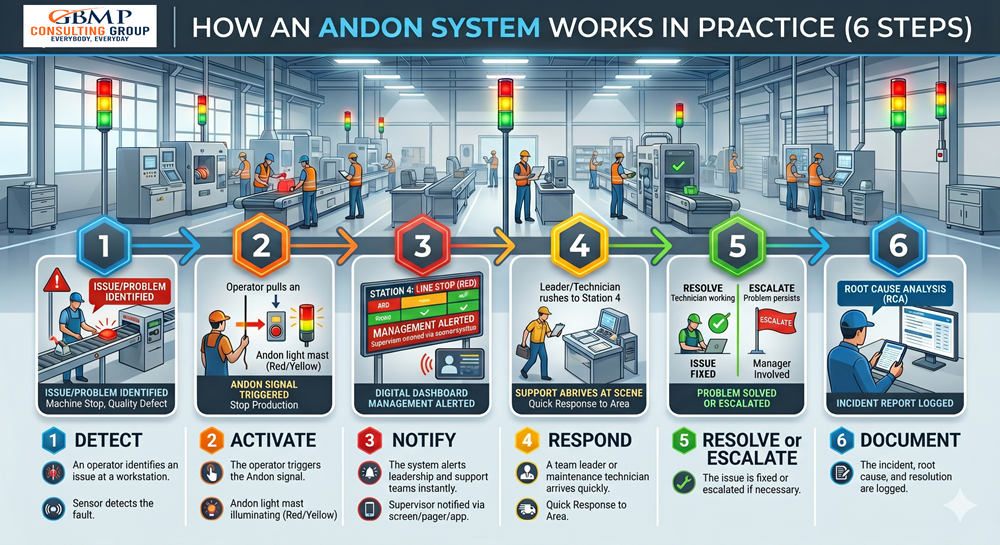
A standard andon signal production sequence follows these steps:
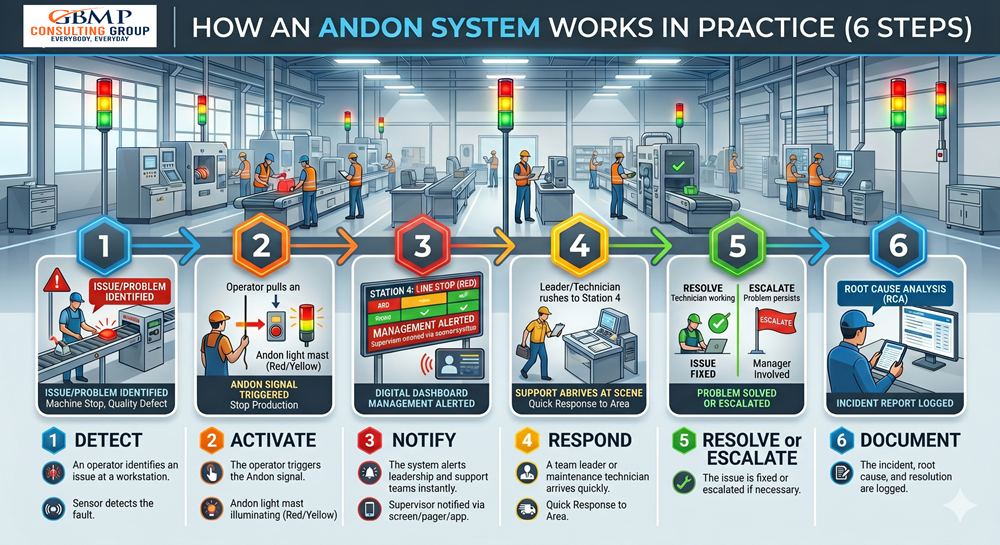
The andon board is the centerpiece of visual management on the production floor and systems can be even more communicative that you may have thought previously. Beyond the simple traffic-light columns you've probably seen in use, digital andon boards now can display:
This visibility is not just for managers. When every person on the floor can see line health at a glance, the whole team moves with shared awareness.
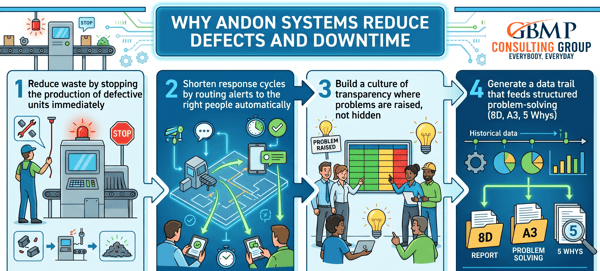
The value of an andon system in manufacturing is speed of containment. Research across lean implementations consistently shows that defects caught at the source cost a fraction of what they cost when discovered downstream, or much worse, by a customer.
Beyond quality, andon systems:
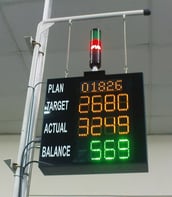 Andon implementations range from basic pull-cord and light-stack setups to fully integrated digital platforms connected to MES and ERP systems. The right level of complexity depends on line speed, product mix, and how mature your existing lean processes are.
What matters most is not the technology, it is the response discipline behind it. An andon signal that goes unanswered trains workers to stop calling. An andon signal that triggers a swift, structured response builds the habit of early escalation.
A well-implemented andon system does not slow down production. It protects it by ensuring that the problems that would cause the biggest delays never get a chance to compound. If you are ready implement an andon system in your facility, the team at GBMP Consulting Group can help. Through hands-on training and facilitation, GBMP guides manufacturing teams through every stage of the process. Visit GBMP's Training and Facilitation page to learn how the team at GBMP can help your team eliminate costly defects.
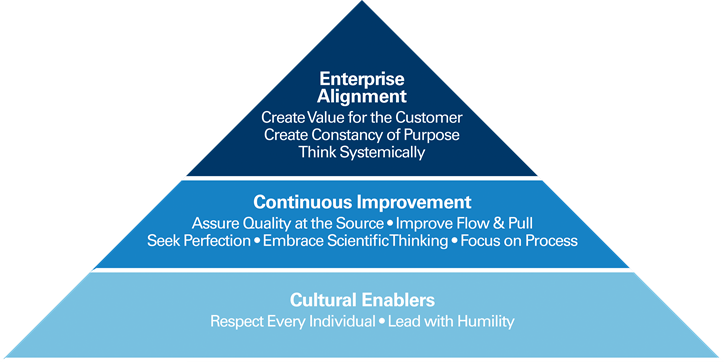
Most continuous improvement efforts stall because they focus on tools instead of culture. A team runs a kaizen event, improves a process, and then...
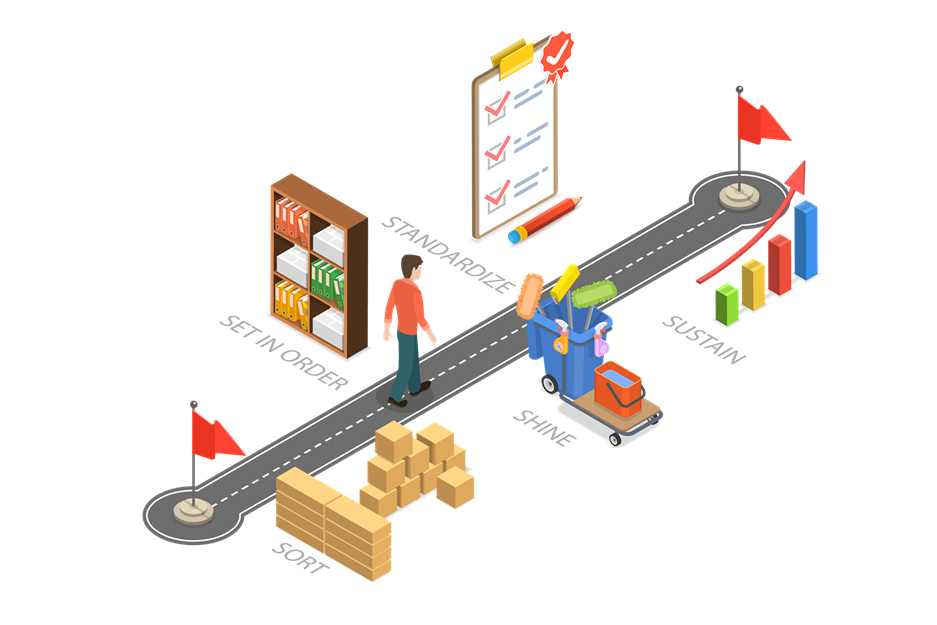
The 5S methodology is a foundational element of lean thinking, designed to create clean, organized, and efficient workplaces. Originating in Japan as...

Poka-yoke, a key concept in lean thinking, refers to designing processes in a way that prevents errors before they happen. Often translated as...