What to Expect from a Lean Manufacturing Assessment
If your operations feel inefficient but you're not sure exactly where the problems are, a free lean manufacturing assessment is the logical first...
5 min read
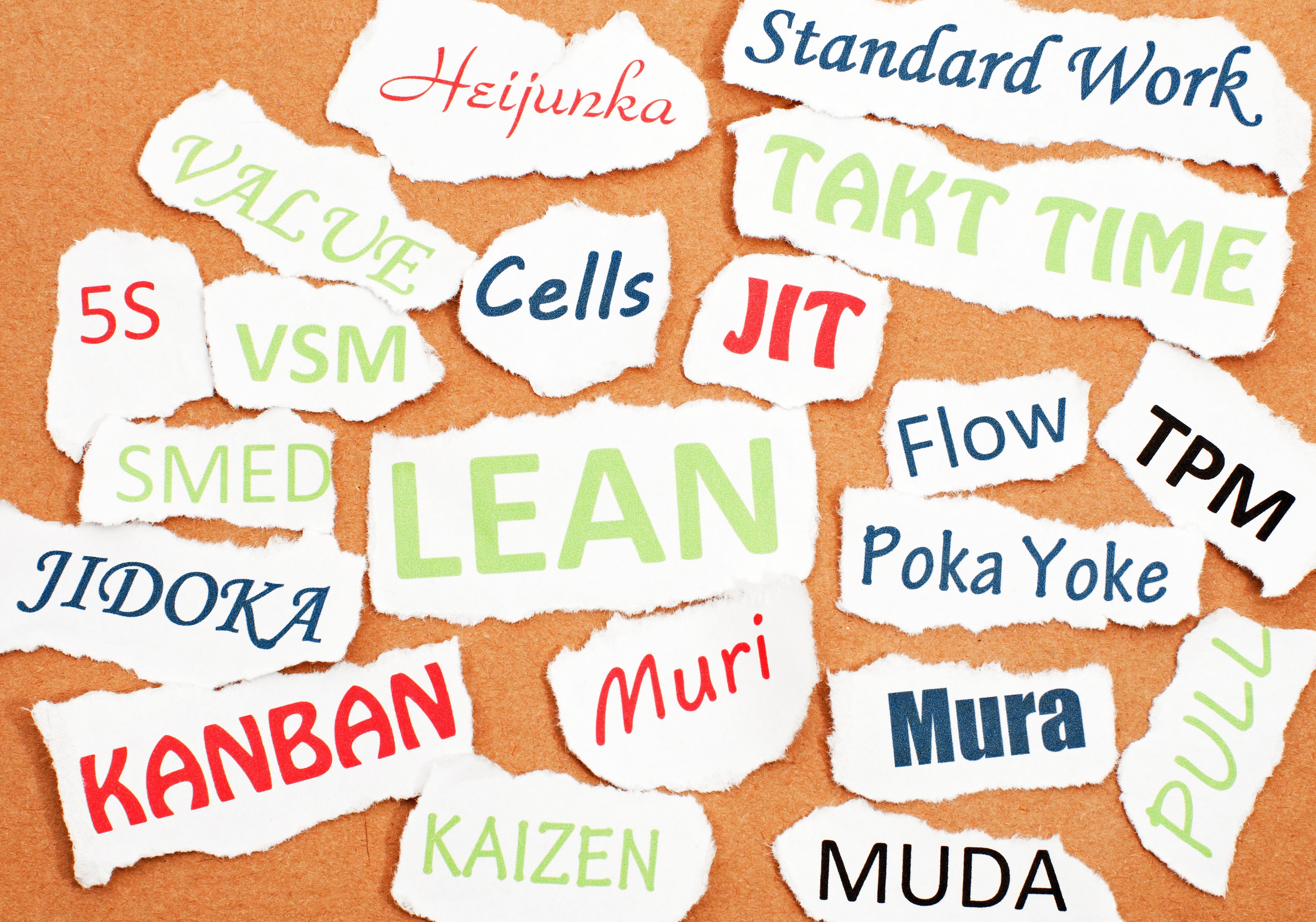
 Lean manufacturing training is a structured approach to teaching organizations how to systematically eliminate waste, improve efficiency, and build a culture of continuous improvement across operations.
For operations leaders, the challenge isn’t understanding what lean is. It’s knowing how to implement it in a way that delivers measurable, lasting results. That’s where the right training program makes the difference.
In this guide, we’ll break down what lean manufacturing training includes, who it’s for, how it works, and how to ensure it delivers real ROI.
Lean manufacturing training is a structured program that teaches individuals and organizations how to apply lean principles, tools, and behaviors to improve operational performance by eliminating waste and increasing value for customers.
Unlike one-off workshops or theoretical courses, effective lean training focuses on real-world application, helping teams identify inefficiencies, solve problems, and sustain improvements over time.
At its core, lean training is about:
🔄Organizations that invest in lean training aren’t just improving processes.
👍 They’re building long-term competitive advantage.
Lean manufacturing training is grounded in the principles of the Toyota Production System (TPS) and lean thinking. These principles provide the foundation for every tool, method, and behavior taught in training.
1. Define Value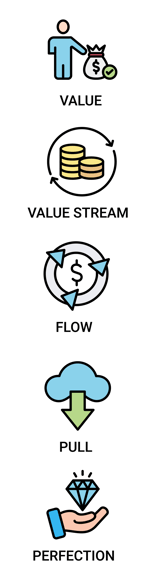
Value is defined from the customer’s perspective. Lean training teaches teams how to distinguish between:
Understanding this distinction is the first step toward meaningful improvement.
2. Map the Value Stream
Teams learn how to visualize the flow of materials and information using Value Stream Mapping (VSM). This reveals bottlenecks, delays, and inefficiencies across the entire process.
3. Create Flow
Lean training emphasizes designing processes so work flows smoothly without interruption. This includes reducing batch sizes, eliminating delays, and balancing workloads.
4. Establish Pull
Instead of producing based on forecasts, lean systems respond to actual demand using pull systems like Kanban. Training helps teams implement these systems effectively.
5. Pursue Perfection
Continuous improvement, also known by the Japanese term Kaizen, is central to lean. Training programs build the mindset and skills needed to continuously identify and eliminate waste.
These principles are reinforced through hands-on learning, simulations, and real-world application.
VP of Operations: SWithout leadership alignment, lean initatives often stall. Senior leaders need lean training to learn how to:
Plant Managers: Plant managers play a critical role in sustaining results and use lean training to:
Continuous Improvement (CI) Managers: CI leaders are often the internal champions of lean and rely on lean training to:
Healthcare Operations Directors: Lean principles extend beyond manufacturing. In healthcare, training helps:
SMB Owners and Executives: For small and mid-sized manufacturers, lean training enables:
One of the first concepts taught in lean manufacturing training is waste identification, often referred to as TIMWOOD.
TIMWOOD: The 7 Wastes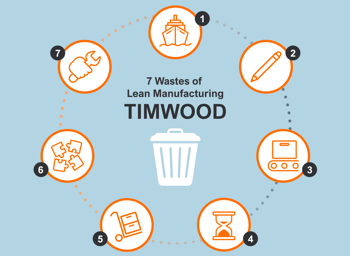
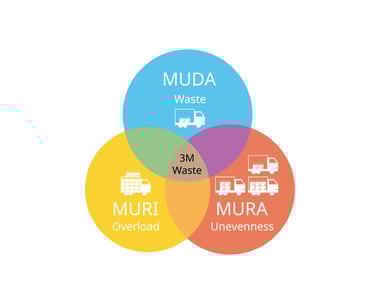
Beyond TIMWOOD: The 3Ms
Lean training also introduces:
Understanding these concepts helps teams identify root causes, not just symptoms.
Lean manufacturing training introduces a wide range of tools, each designed to solve specific operational challenges. Effective training doesn’t just explain these tools. It teaches us when and how to use them.
Continuous Improvement Tools
Workplace Organization
Flow & Scheduling
Equipment & Efficiency
Setup & Flexibility
Quality & Error Prevention
Strategic Alignment
Organizations can choose from several types of lean training programs depending on their needs and maturity level. The most effective organizations combine multiple formats to reinforce learning.
Onsite Training: Customized training delivered at your facility.
Best for:
Public Workshops: Open-enrollment sessions with participants from multiple companies.
Best for:
Virtual Training: Online sessions and remote coaching.
Best for:
Lean Learning Paths: Structured programs combining multiple courses over time.
Best for:
Shingo-Aligned Courses: Programs aligned with the Shingo Model, emphasizing culture and principles.
A well-designed lean training program follows a structured progression.
1. Operational Assessment
The process typically begins with an assessment to identify:
2. Leadership Alignment
Executives participate in briefings to:
3. Training & Workshops
Teams participate in hands-on sessions covering:
4. Implementation
Participants apply what they’ve learned to actual processes, often through:
5. Coaching & Sustainment
Ongoing support ensures improvements are maintained and expanded.
Lean training timelines vary, but most programs follow a phased approach:
⌛Lean is not a one-time initiative. It’s a long-term commitment.
Lean training delivers both operational and financial benefits.
Operational Benefits
Financial Benefits
Strategic Benefits
Measuring ROI is critical to ensuring lean training delivers value.
➡️ Key Metrics to Track
➡️ Financial Impact
Organizations often see:
➡️ Cultural Indicators
While often used together, lean training and lean consulting serve different purposes. The most effective approach combines both: training to build capability, consulting to guide execution.
Lean principles apply across industries, but implementation differs. Despite differences, both share the same goal: delivering value with less waste.
As many practitioners emphasize, tools don’t create result. People do.
Common Pitfalls: One of the most common reasons lean initiatives fail is a lack of cultural alignment.
Treating lean as a toolset instead of a mindset
Lack of leadership commitment
Failing to engage frontline employees
The Role of Culture: Successful lean organizations emphasize:
Treating lean as a toolset instead of a mindset
Lack of leadership commitment
Failing to engage frontline employees
Selecting the right partner is critical to success. The right provider should act as a partner, not just a trainer.
What to look for:
Proven track record with real results
Industry experience
Hands-on, practical training approach
Questions to ask:
How do you ensure sustainment?
Do you customize training to our operations?
What results have you achieved with similar organizations?
Red flags:
Overly theoretical programs
Lack of real-world experience
No follow-up or coaching
What is lean manufacturing training? Lean manufacturing training teaches organizations how to eliminate waste, improve efficiency, and build a culture of continuous improvement.
How long does lean training take? Initial training can take a few months, but full transformation typically takes 6–12 months or longer.
What industries benefit from lean training? Manufacturing, healthcare, service industries, and logistics all benefit from lean principles.
Is lean training worth the investment? Yes—organizations often achieve significant cost savings, productivity gains, and improved quality.
Can small companies implement lean? Absolutely. Lean is especially valuable for SMBs looking to grow efficiently.

Lean manufacturing training is more than a program—it’s a transformation.
Organizations that invest in the right training don’t just improve processes. They build a culture that continuously drives performance, engages employees, and delivers value to customers.
If you're ready to take the next step, consider starting with an operational assessment to identify your biggest opportunities.

If your operations feel inefficient but you're not sure exactly where the problems are, a free lean manufacturing assessment is the logical first...
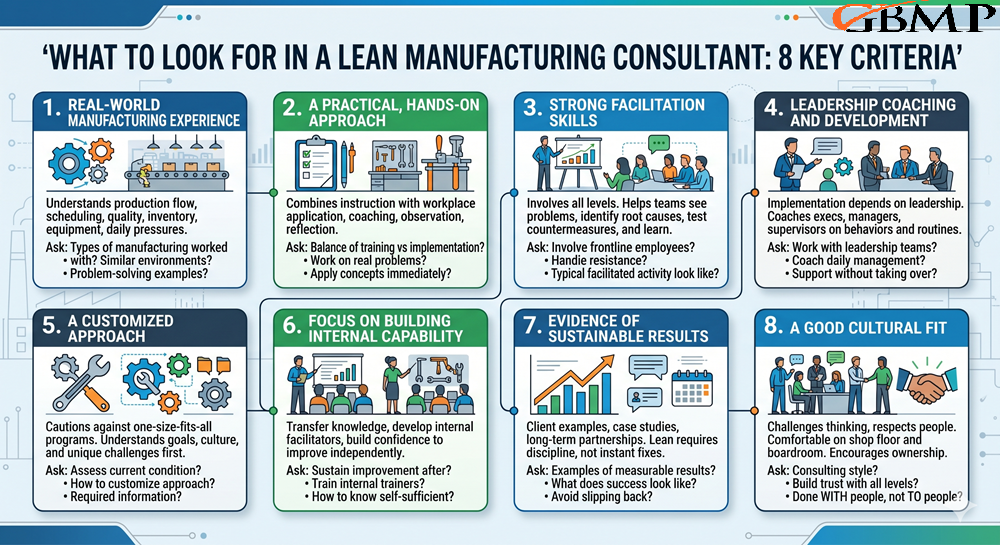
Choosing the right lean manufacturing consultant can make the difference between short-term improvement activity and long-term operational...
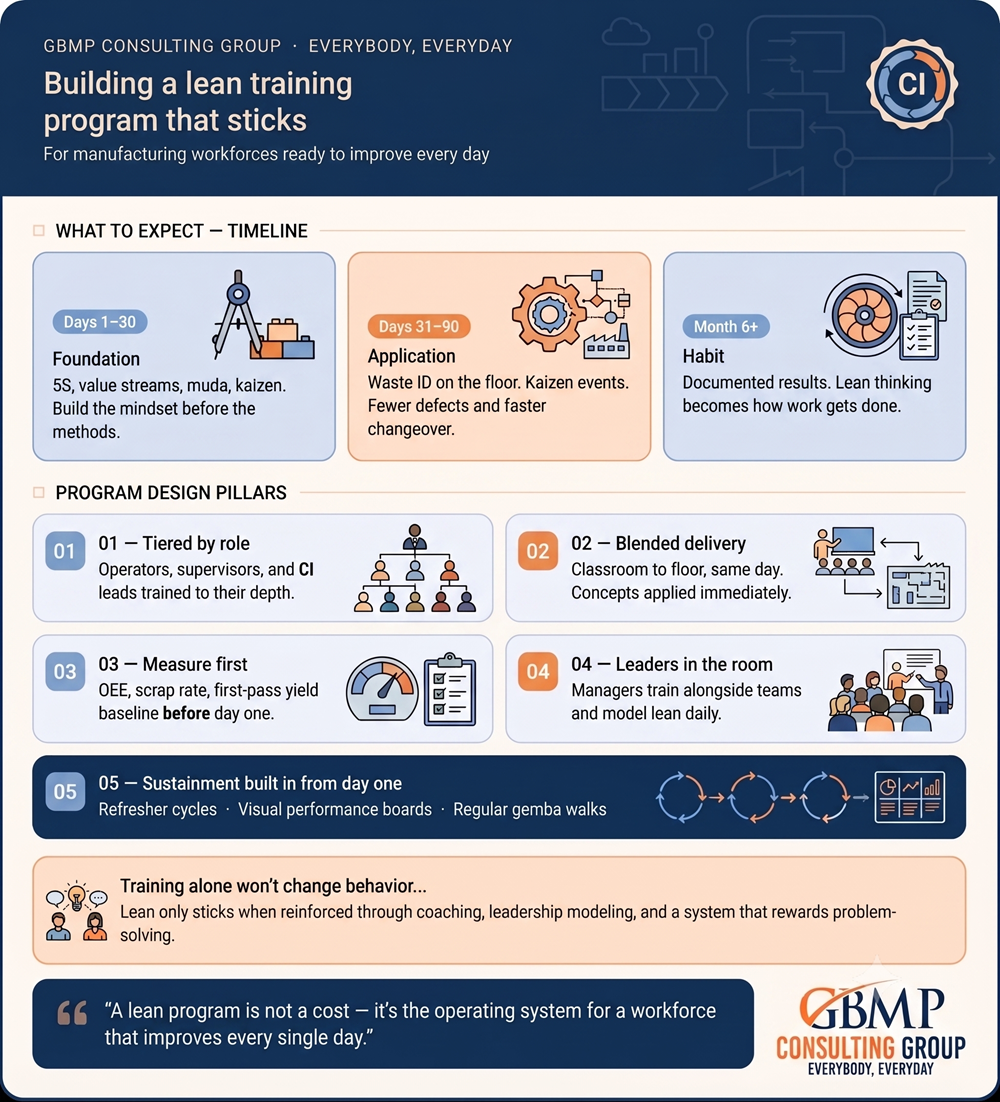
Building a lean training program for your manufacturing workforce is one of the most effective investments you can make in long-term operational...