When leaders talk about Lean, the conversation almost always centers on material flow.
-
Reduce inventory.
-
Improve throughput.
-
Create continuous flow.
But here’s the overlooked truth: Material cannot flow one by one unless information flows one by one. And in most organizations, it doesn’t.
The Illusion of “Real-Time”
Years ago, information moved through organizations on greenbar paper. Today it moves through ERP systems, dashboards, inboxes, shared drives, and messaging platforms.
We’ve gone paperless. But we haven’t gone flow-based.
We still batch information:
- Orders entered at the end of the day
- Emails processed in blocks
- Schedules updated periodically
- Reports reviewed weekly
- Problems analyzed after the shift
The technology is modern. The behavior is not.
Material may be staged on the floor, but the information controlling it is often sitting in digital queues — invisible inventory extending lead time and increasing risk.
Information Has Waste, Too
When we teach value stream mapping, it’s called material and information flow for a reason.
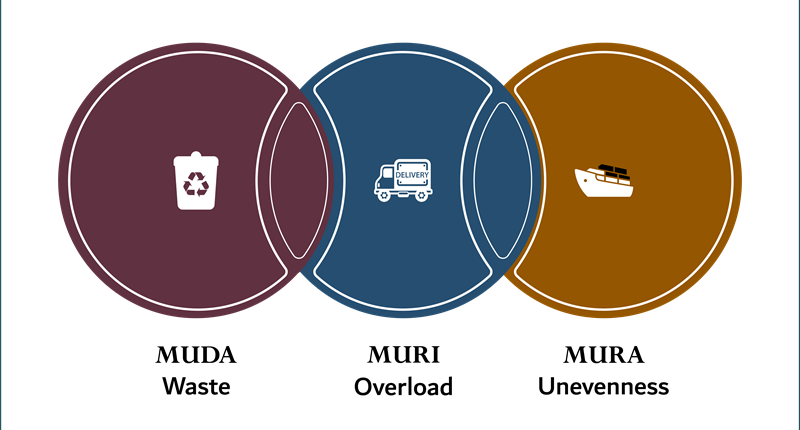
Information suffers from the same wastes as material:
- Overproduction – generating forecasts, schedules, or reports too early
- Inventory – orders sitting in inboxes or ERP queues
- Waiting – approvals, responses, data entry
- Motion – searching for the “right” version
- Defects – conflicting or outdated data
At Toyota, inventory is sometimes symbolized as a headstone — because it represents stagnation.
Information stagnates, too. And when it sits, it becomes wrong.
Meanwhile, customers don’t care whether their order is stuck in a physical queue or a digital one. Lead time is lead time.
What TPS Actually Requires
The Toyota Production System is not a collection of tools. It is a design logic.
Spear and Bowen’s research on TPS identified several core rules:
- Work must be highly specified (content, sequence, timing, outcome).
- Customer-supplier connections must be direct and unambiguous.
- Every product or service must follow a simple, consistent path.
- Problems must be solved immediately using scientific thinking.
None of this works without precise, real-time information flow.
If multiple systems can change a schedule independently, connections aren’t direct.
If work can be routed five different ways depending on convenience, pathways aren’t simple.
If problems are collected and reviewed later, improvement isn’t immediate.
In each case, batching information undermines flow.
What One-by-One Information Looks Like
One-by-one information flow isn’t theoretical. It’s visible:
- A Kanban card that clearly signals what to produce — and nothing more.
- A heijunka board that defines exact sequence and mix.
- An hour-by-hour production chart that exposes misses in real time.
- A checklist used step-by-step, not completed at the end.
- Visual controls embedded directly in the workplace.
In these systems:
- Material flows forward.
- Information flows backward.
- Problems surface instantly.
There’s no ambiguity. No hidden backlog. No “we’ll look at that later.”
When something breaks, it stops the system — and that’s intentional.
Flow is designed to expose instability, not hide it.
The Leadership Test
Here’s the real question:
When your system surfaces a problem, does someone respond immediately?
If the answer is no, people will stop surfacing problems.
Visual tools will become paperwork.
Dashboards will become decoration.
Continuous improvement will become episodic.
One-by-one information flow requires more than tools. It requires leadership intent.
The Bottom Line
Continuous flow depends on three things:
- One-by-one material flow
- One-by-one problem solving
- One-by-one information flow
You cannot have the first two without the third.
If flow feels elusive in your organization, don’t just look at machines, staffing, or layout.
Look at how information moves.
If it’s batching, stagnating, or diverging… flow is mathematically impossible.
And that’s where real Lean work begins.