Why Unevenness (Mura) Sinks Even the Best Canoers
Here’s a quick story: In 2014, my 13-year-old son and I wenton a canoe trip in the Boundary Waters between Minnesota and Ontario. It wasjust us, a guide, and nature, no phones, no outside contact.
On the fourth day the weather turned nasty. We hit Cash Bay, the entry to Canada’s Quetico Park, just as headwinds whipped up four-foot swells. The canoe was heavy with gear, but still, we only had a couple of inches between us and the waterline. My job? Just paddle straight into the waves and keep going.
But those waves kept building, and soon water was splashing over the bow. No matter how hard we paddled, we couldn’t fight the uneven, unpredictable water. Eventually, our canoe swamped and we had to swim to a small island for safety.
So, what is the applicable takeaway from this experience? Unevenness and inconsistency (what lean thinkers call "mura") can swamp even the best teams. Calmer more consistent conditions always make for smoother sailing.
What is Mura?
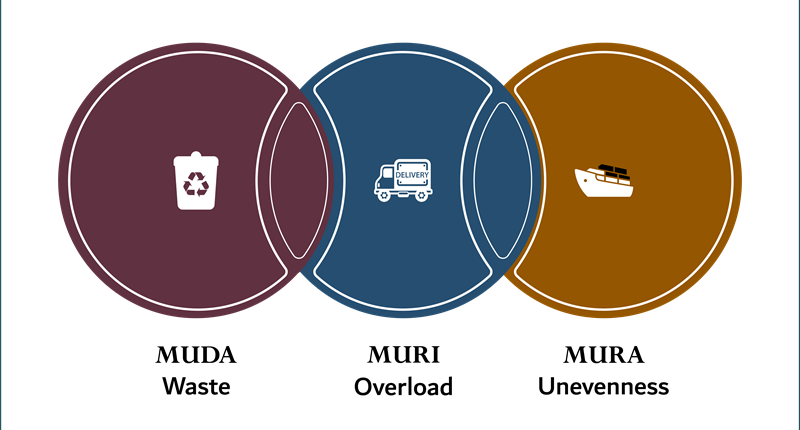
Mura is Japanese for "unevenness" or "inconsistency." In lean management, it’s often overshadowed by the more well-known "muda" (waste), but mura is just as important, maybe more so. It’s the hidden force behind many of our daily struggles at work. Here are a few examples of how mura creeps in to our daily work processes:
1. Customer-Related Mura
- Fluctuating orders and last-minute requests throw schedules into chaos.
- Special requests, product mix variations, and unpredictable demand all create instability, just like those sudden waves my son and I experienced on Cash Bay.
2. Time-Related Mura
- The start and end of shifts, days, or months are either crazy-busy or too slow.
- Think of the mad rush at month’s end, followed by a lull at the start of the next period.
- Poor preparation and handoffs between tasks or teams make things worse.
3. Policy-Related Mura
- Internal policies (like sales bonuses or artificial production targets) create feast-or-famine cycles.
- Promotions, push for machine utilization, or batch production can all send waves of work crashing over your team, often at the worst times.
Why Mura Matters
Mura isn’t just annoying. It’s the root cause behind many visible wastes and strains at work. It leads to overburden (muri), mistakes, and missed opportunities. And because it’s often hidden, we just accept it as “business as usual.”
But if you can spot and reduce mura, by leveling workloads, smoothing out policies, and prepping for key transitions, you’ll create a steadier, more productive flow. You’ll spend less time fighting fires and more time doing great work.
Where is Mura?
Production and manufacturing are the most obvious places to look. This is where uneven workloads really show up. Workers and machines are overloaded during peak times (think month-end, bonuses, or promotions). Why? Because everything gets scheduled to finish at the same time instead of being spread out.
It’s not just a factory problem. Ever been to a doctor’s office at 9:00 am? The waiting room is packed, then completely empty half an hour later. The real issue? Bad scheduling. We create our own chaos.
Sometimes companies even overproduce to keep machines running and chasing “absorption.” And when processes aren’t under control, things get even more unpredictable. Cycle times go up and down, and everything gets out of balance.
Then, someone steps in with heroics. You know the type: the “almighty worker” who gets things done, no matter what. We celebrate these people, but really, we’re just rewarding workarounds and burnout.
The cost? Mistakes, wasted time, scrap, rework, and a lot of shuffling people around handling the peaks. Untrained staff get tossed in during busy times and are left idle when it’s slow. It’s exhausting, for everyone.
Engineering is the same story. Engineers get loaded up with too many projects. Everything moves in fits and starts. Sometimes it’s what I call a “guru bottleneck. There’s one person everyone needs to get answers, which creates more delays. The work just sits there, waiting.
Sales gets blamed for inconsistent orders too. Some of that is out of their control. customers buy when they want. But sales bonuses create end-of-month cherry-picking. Everyone scrambles to hit targets, pulling in orders early or pushing some aside. It’s a team effort, but not in a good way. This “hockey stick” effect means half the orders ship in the last week of the month. Then, nothing moves at the start of the next month. Customers wait, and work piles up.
Customer service feels the pain too. Peaks are impossible to staff for. The result? Overburdened call centers result in long wait times and frustrated customers. Add in unclear policies, and customer service reps become message-takers, not problem-solvers. No one wins.
Supply chain and scheduling have their own headaches. Material comes in waves, not steadily. We wait for full shipments, then suddenly rush to move everything. Parts are late. Everyone’s waiting.
HR isn’t immune. Recruiting is tough. Not enough people, or not the right people. Then, HR and admin tasks all pile up at the end of the quarter or the year (think benefits reviews or performance appraisals). Why not stagger them? Poor planning. So, everyone drowns in paperwork for a few weeks and then has nothing to do.
IT has peaks and valleys too. System outages, backups, or updates aren’t always scheduled with the rest of the business in mind. Whole departments end up sitting around, waiting for the system to comeback online.
Finance is another classic example. I once worked with a company that literally shut down for three months to close the books for Sarbanes-Oxley. Production and development stopped. So, everyone overproduced before the shutdown, creating even more chaos.
The point is all these issues are connected. Problems on the production floor often start somewhere else, with sales policies, supplier delays, HR bottlenecks, or finance deadlines.
And if you want to fix this, management must step up and create better policies that spread out the workload and keep things moving smoothly in every department.
Here’s another quick story: In one company, we realized we were shipping 50% of our orders in the last week of every month. The controller thought everyone was just slacking off until the end. I invited him to see for himself. After watching the chaos, he agreed that this was nuts. So, we stopped pulling in orders early just to hit targets. We let things flow more evenly.
And what do you think happened? Overtime dropped. Defects went down. On-time delivery improved. We even had products to ship in the first week of the month. It took a little courage from management, but it totally worked.
So, Here’s The Bottom line:
Don’t just fight ‘visible’ waste. Look for the unevenness beneath the surface. Calmer waters make for better paddling, whether you’re in a canoe or on the shop floor. No single department can break the cycle alone. Management needs to lead the way. Level the workload. Make things better for everyone - employees and customers – and everyone will notice the difference.