Is your manufacturing team working hard but not well aligned? The missing piece could be better strategy deployment. When done well, Hoshin Kanri (aka strategy deployment) translates broad quarterly and yearly goals into daily actions.
Lean, inspired by the Toyota Production System, rests on three pillars:
1. Tools: 5S, Value Stream Mapping, SMED, mistake proofing, continuous flow, and all the rest. These give you structure and provide the “How.” However, tools alone won’t transform your business.
2. Management: Leaders need to educate and motivate everyone to be problem solvers, not just the chosen few. The environment must be favorable for improvement. If we’re struggling to survive, improvement often gets mistakenly put on the backburner.
3. Philosophy: The beliefs that guide you. Humility and respect are the foundation. As Teddy Roosevelt said: “People don’t care how much you know until they know how much you care.” Trust starts with empathy and listening.
Barriers to improvement are usually cultural or managerial. Outdated policies or lack of motivation at the top are the real obstacles. Shigeo Shingo, one of Lean’s greatest pioneers, said a leader’s most important job is to inspire through their own commitment.
Resistance is cautionary, not disrespectful. People need information and reassurance. A quality strategy deployment plan featuring transparent communication, visible leadership commitment, keeps everyone informed and involved, this staves off fear and skepticism.
The Answer: Everyday Kaizen
Daily, incremental improvements drive lasting success. Here are some ideas to make Continuous Improvement truly continuous in 2026:
- Don’t fear dissatisfaction. It’s fuel for change. Complacency is the real enemy.
- Improve in this order: easier, better, faster, then cheaper. If we make a change to save money, but it makes the job harder, who is going to participate? No one. Backsliding will occur immediately. Easier, better, faster and only then cheaper.
- Go deep, not wide. Win small, scale up. Don’t try to change everything at once. Pick a pilot area, product, etc. and make an improvement.
- Move slowly to go fast. Build credibility and create believers.
- Help everyone see how their work fits into the big picture. This is alignment.
- Management must lead by example. Physical presence, honest engagement, and actions matter…a lot.
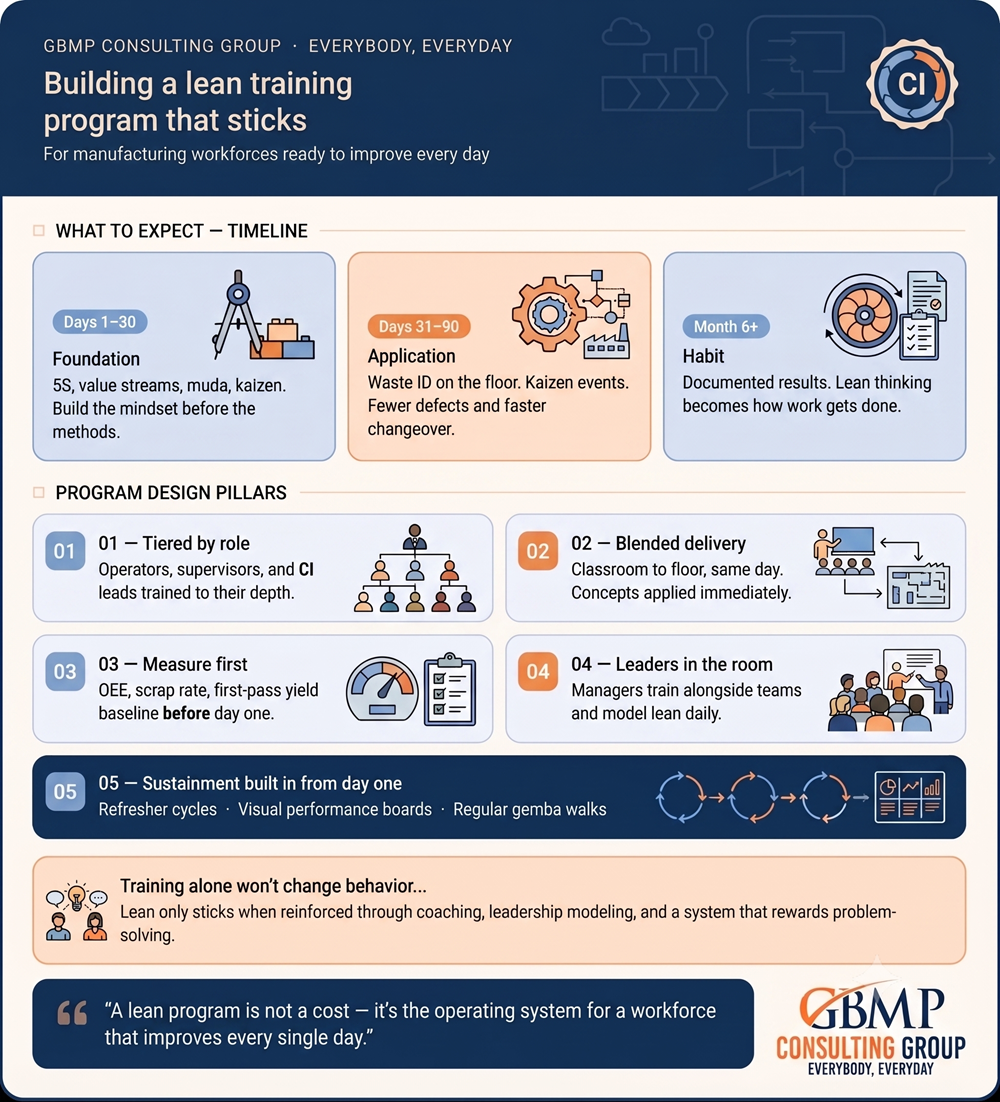
- Real transformation needs both tools and motivation. It’s 10% tools, 90% people, but the tools still matter. Make sure your team is equipped with the knowledge and confidence to succeed.
Bottom line: Continuous improvement is a mindset, a method, and a movement. Build a culture where every day gets a little better. Check out this blog post by The Old Lean Dude, Bruce Hamilton, about how organizations successfully align their long-term vision with daily operations using the X-Type Matrix.