Lean Six Sigma Certification: Which Belt Level Does Your Team Need?
If your organization is serious about reducing waste, improving quality, and solving problems at the root, Lean Six Sigma certification is one of the...
2 min read
When organizations begin their continuous improvement journey, one of the most common questions is choosing to implement lean vs six sigma.
What’s the difference? While both methodologies aim to improve performance, reduce waste, and increase customer value, they take different approaches to achieving those goals.
Understanding the lean six sigma difference can help you determine whether your organization needs Lean, Six Sigma, or a combination of both.
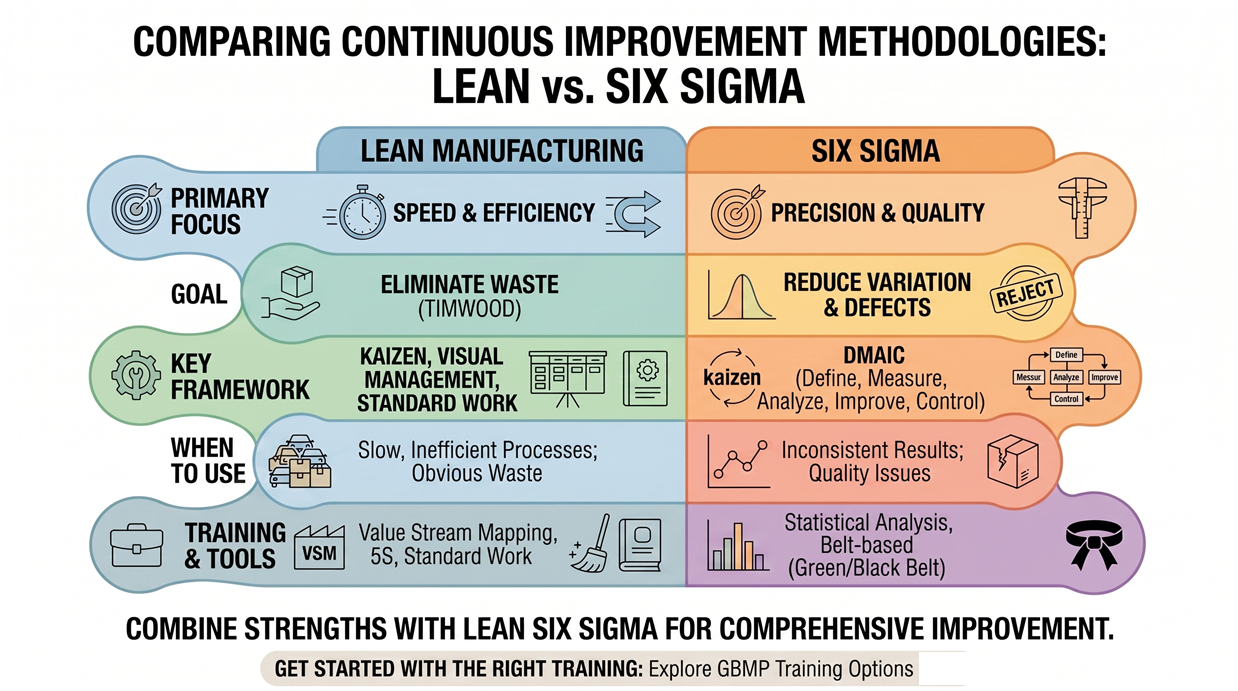
At a high level, Lean focuses on speed and efficiency, while Six Sigma focuses on precision and quality.
Lean is centered on eliminating waste and improving flow. Using frameworks like the 7 wastes of lean manufacturing (TIMWOOD), Lean helps organizations streamline processes, reduce lead times, and increase responsiveness. It emphasizes visual management, standardized work, and continuous improvement (kaizen).
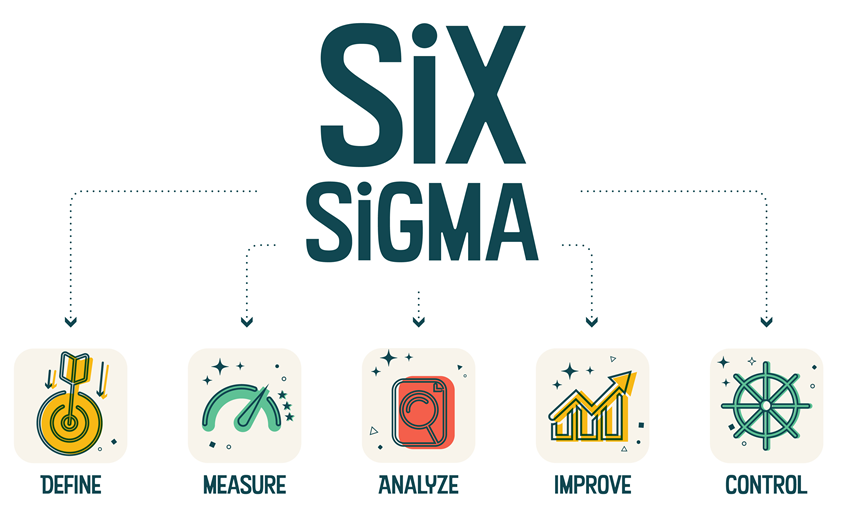
Six Sigma, on the other hand, is a data-driven methodology aimed at reducing variation and defects. It uses statistical tools and structured problem-solving methods like DMAIC (Define, Measure, Analyze, Improve, Control) to improve process consistency and quality outcomes.
Here’s a simplified breakdown:
So when deciding lean or six sigma, consider your primary challenge:
In many cases, organizations adopt Lean Six Sigma, combining the strengths of both approaches to improve both speed and quality simultaneously.
The decision between Lean and Six Sigma isn’t always either/or. Instead, it depends on your operational goals:
For example, a manufacturing plant struggling with excess inventory and long changeover times would benefit from Lean tools. Meanwhile, a process with frequent defects or customer complaints would benefit from Six Sigma analysis.
To successfully implement either methodology, training is essential. Organizations typically build capability through structured learning paths:
The right training approach depends on your goals, team structure, and level of maturity. Some organizations start with foundational Lean education and later introduce Six Sigma for deeper problem-solving capability.
Ultimately, the lean vs six sigma decision comes down to your organization’s biggest constraints. Are you losing time, or losing quality - or both?
The most successful organizations don’t treat Lean and Six Sigma as competing systems. Instead, they use them together to create a culture of continuous improvement, where waste is eliminated, variation is reduced, and value to the customer is maximized.
If you’re evaluating lean or six sigma for your organization, the right training makes all the difference. GBMP offers a range of programs designed to build practical skills in Lean, Six Sigma, and integrated approaches. Explore GBMP's Components of Training to find the right starting point for your team.
With the right foundation, your organization can move beyond theory and start achieving measurable results by working faster, more efficiently, and with higher quality.
If your organization is serious about reducing waste, improving quality, and solving problems at the root, Lean Six Sigma certification is one of the...
When an organization decides to invest in lean, one of the first decisions is how to get there: through structured training or hands-on consulting...
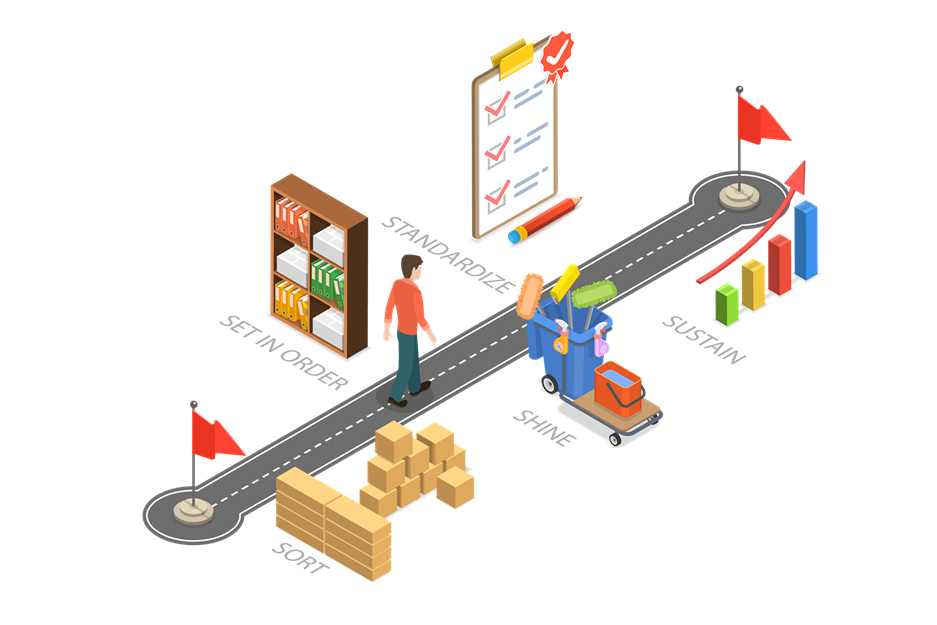
The 5S methodology is a foundational element of lean thinking, designed to create clean, organized, and efficient workplaces. Originating in Japan as...